SOLVENCY II
Manage Solvency II requirements in one platform
Centralize risks, controls, indicators, responsibilities, regulatory data and action plans. Iskera connects the components of your prudential framework to support risk oversight, ORSA preparation and regulatory compliance.
Iskera connects your prudential framework to support risk oversight, ORSA preparation and regulatory compliance.
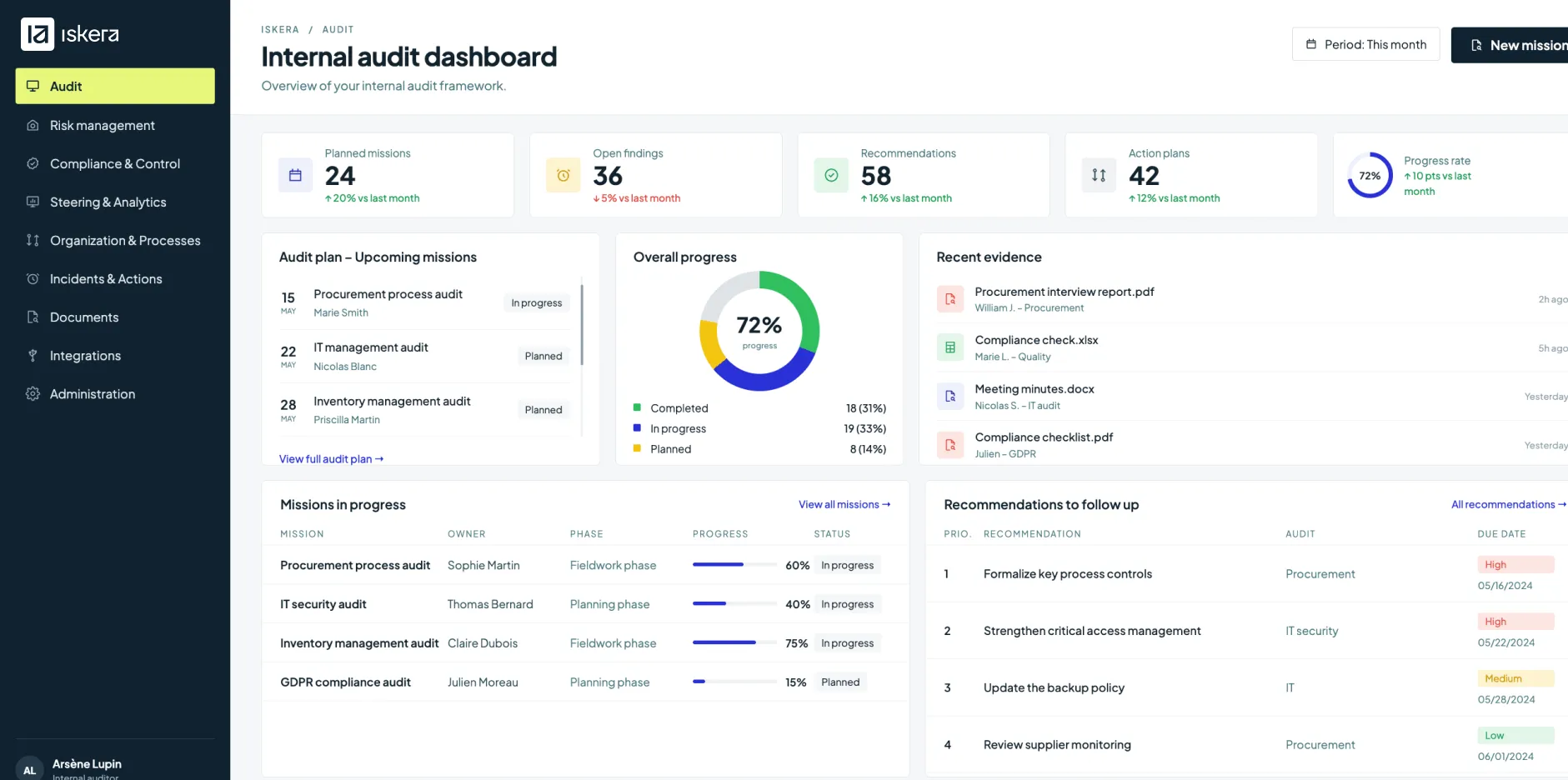
Connect prudential requirements, risks and governance
Solvency II is built on three complementary pillars: quantitative valuation and capital requirements; governance and risk management, including the ORSA; and supervisory reporting and public disclosure. Compliance goes beyond calculating the SCR or MCR: it requires connecting risks, controls, responsibilities, data, decisions and supporting evidence. Iskera brings this information into one shared environment.
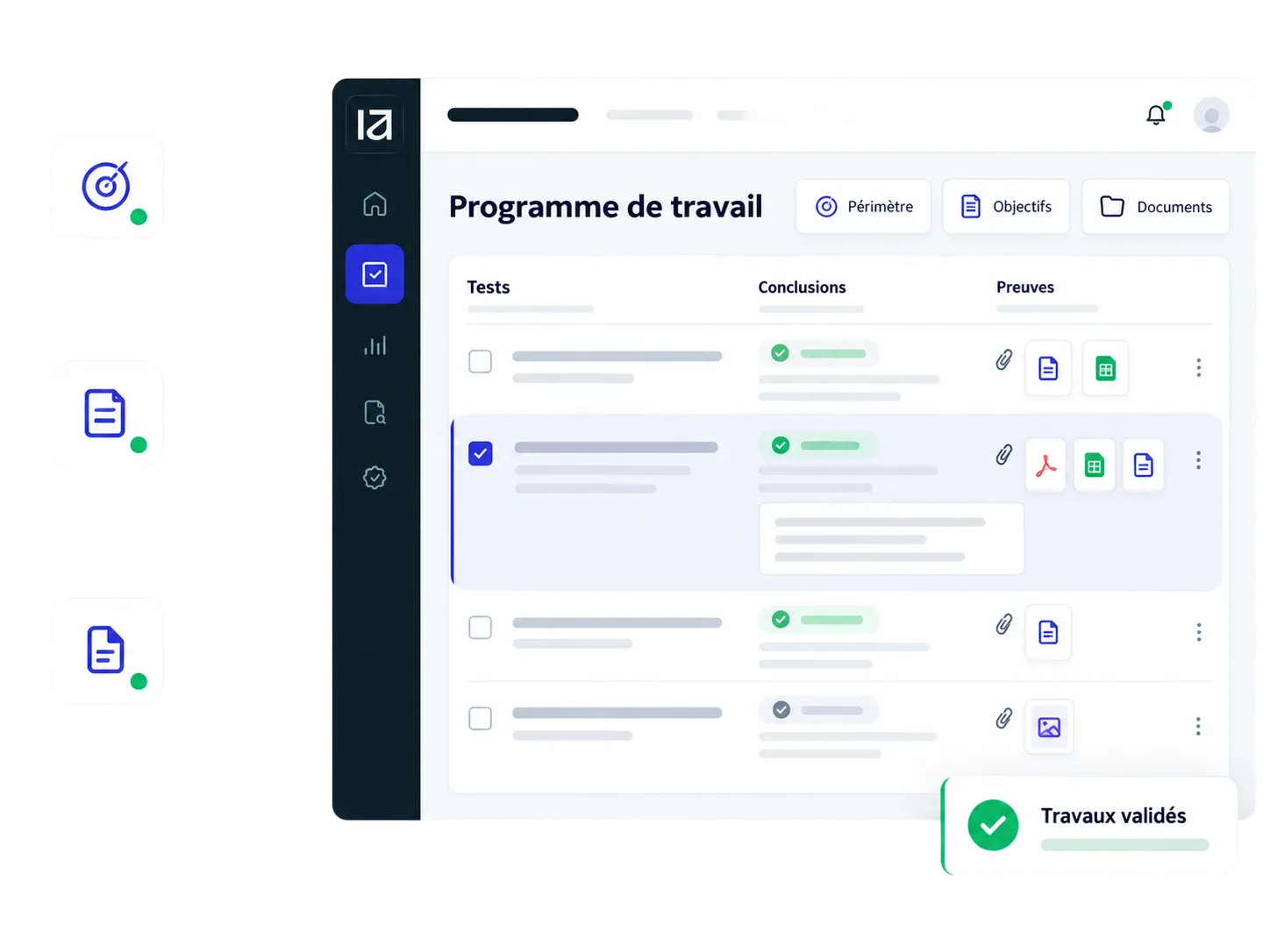
Iskera brings these elements together to provide a consolidated, up-to-date view of your prudential governance.
Structure risk management and your ORSA
Centralize risks and connect them to activities, entities, indicators and mitigation measures. Prepare ORSA assessments using a shared repository and retain a record of evaluations, scenarios, decisions and action plans.
- Consolidated risk profile
- Recorded assessments and scenarios
- Risks linked to controls and actions
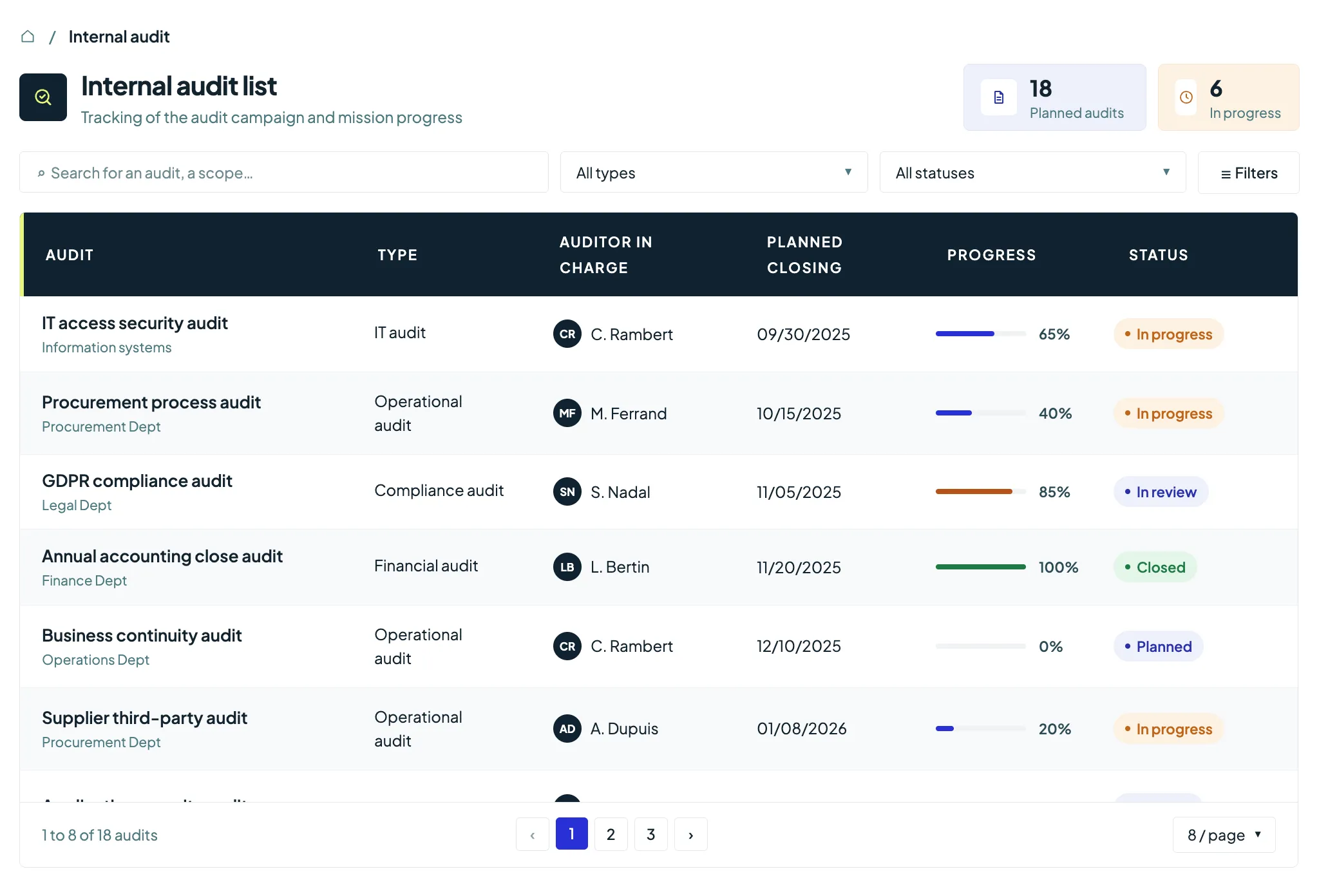
Strengthen governance and internal controls
Define responsibilities, policies, controls and supporting evidence within your prudential framework. Connect work across risk, compliance, internal control, audit and other functions to create a shared view of risk mitigation.
Connect work across risk, compliance, internal control, audit and other functions for a shared view of risk mitigation.
- Clearly assigned responsibilities
- Controls linked to risks
- Centralized results and evidence
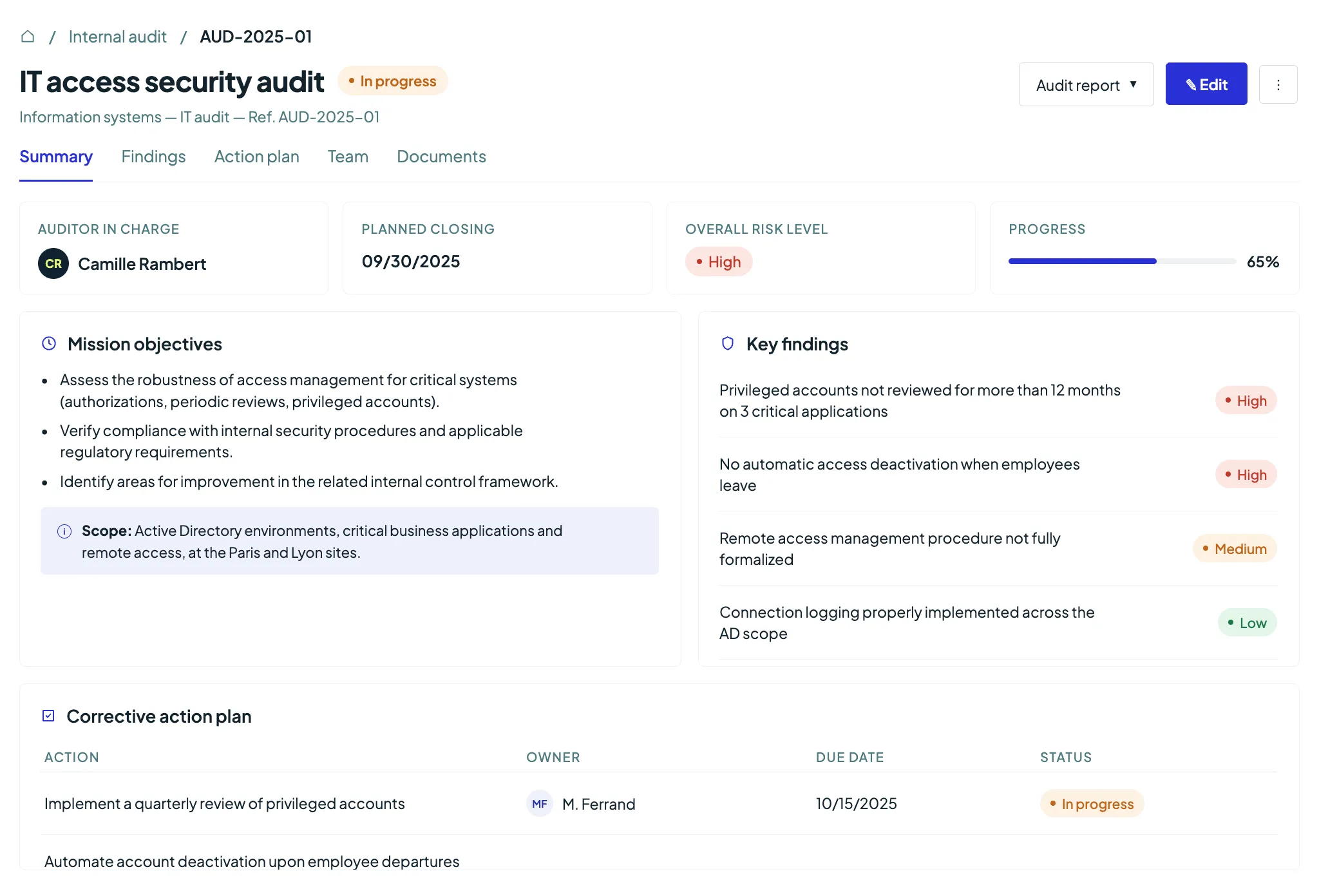
Improve regulatory data and reporting quality
Organize supervisory reporting by identifying required data, owners, validation steps and controls. Centralize evidence for Quantitative Reporting Templates (QRTs), supervisory submissions and disclosures to maintain a clear audit trail.
Centralize data and evidence for QRTs, supervisory reports and disclosures to maintain a clear audit trail.
- Centralized regulatory deadlines
- Traceable quality checks and approvals
- Accessible sources and evidence
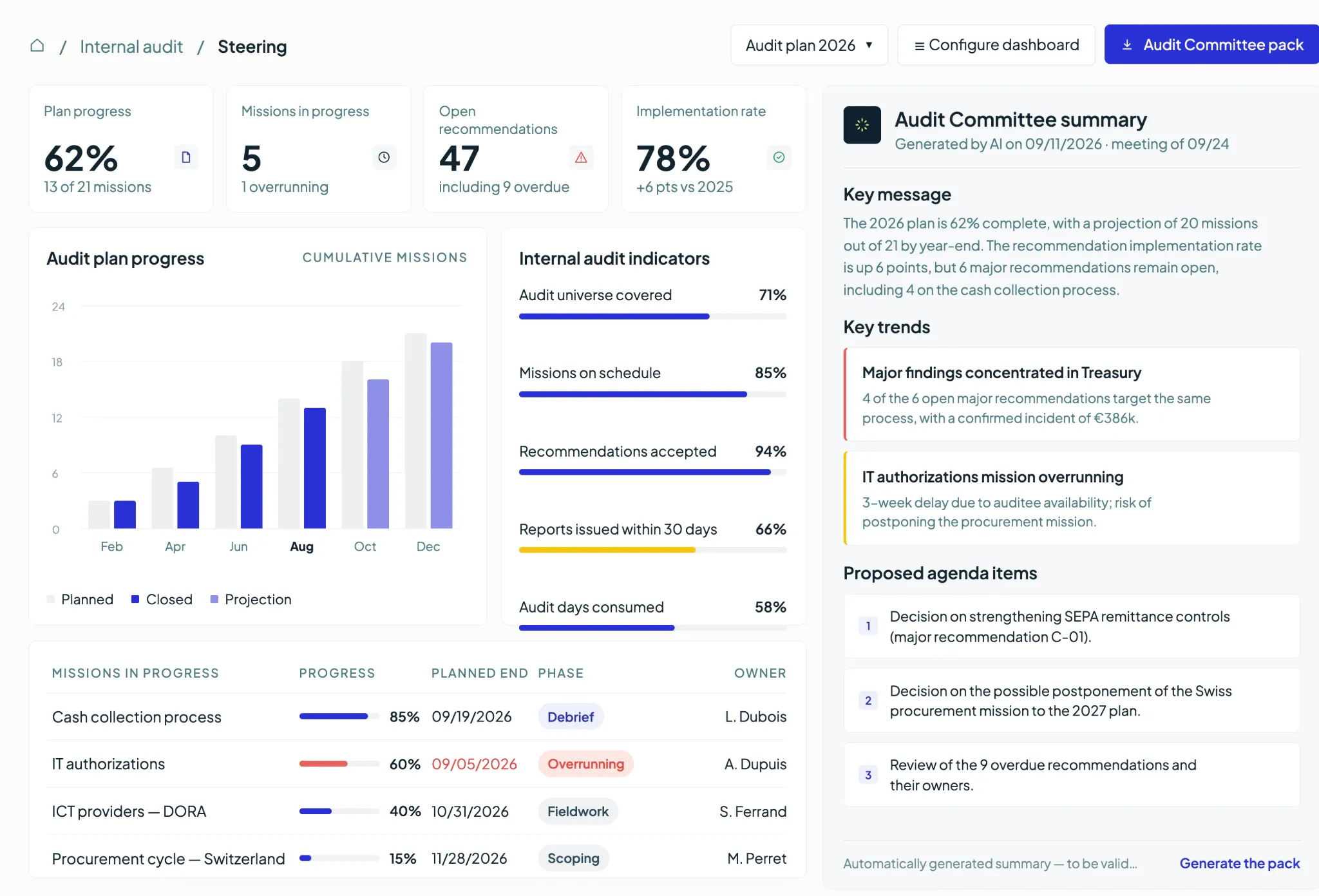
Monitor your prudential framework continuously
Bring solvency indicators, risks, controls, actions and deadlines together in dashboards tailored to each level of responsibility. Identify shifts in your risk profile, outstanding work and issues requiring attention.
Identify changes in your risk profile, outstanding work and issues that need particular attention.
- Consolidated indicators by entity
- Deadline and action alerts
- Reporting for risk teams and management
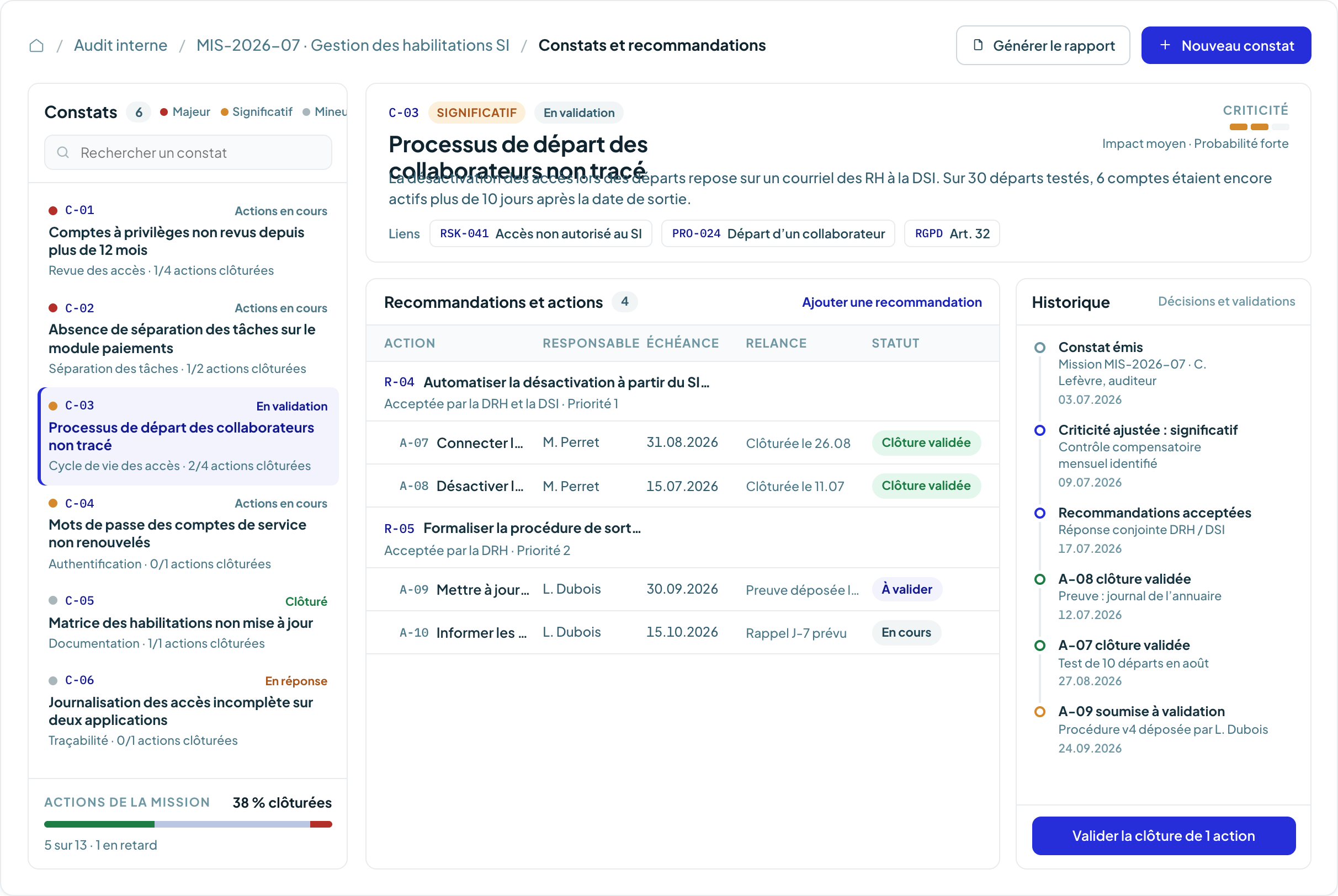
Clearer, more traceable Solvency II governance

100%
pillars brought together in one management environment
- 01
An ORSA connected to your risk profile
Base assessments on a shared repository and keep a record of assumptions, scenarios, analysis and decisions.
- 02
Governance that's easier to demonstrate
Connect responsibilities, policies, risks, controls and evidence to demonstrate how your framework operates.
- 03
Better control of regulatory data
Identify data sources, owners and controls behind information used in prudential reporting.
- 04
Continuous action tracking
Turn findings from controls, audits, risk assessments and ORSA exercises into actions tracked through to closure.
Build your Solvency II framework in 3 steps
Connect risks, governance, controls, data and reporting within a consistent and manageable prudential framework.
01
Structure your central repository
Import existing risk registers, policies, controls, indicators, ORSA histories, action plans and regulatory obligations. Organize your framework by entity, activity, business line or risk area.
Organize your framework by entity, activity, business line or risk category.
02
Connect risks, controls and responsibilities
Link each risk to relevant mitigation measures, owners, indicators, documents and controls. Coordinate contributions to ORSA assessments and regulatory processes.
03
Monitor and update your framework
Track risks, controls, actions, data and deadlines in consolidated dashboards. Update your framework as your risk profile, organization or regulatory requirements evolve.
Manage Solvency II compliance day to day
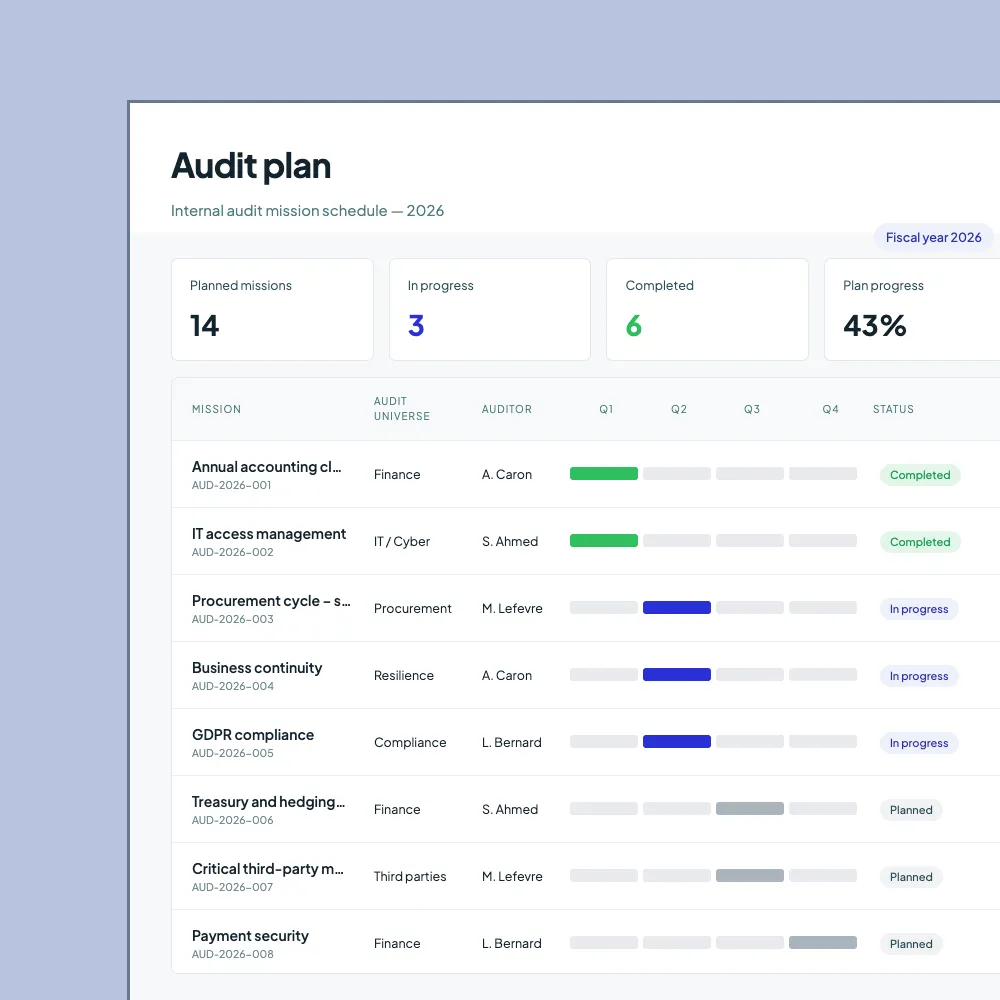
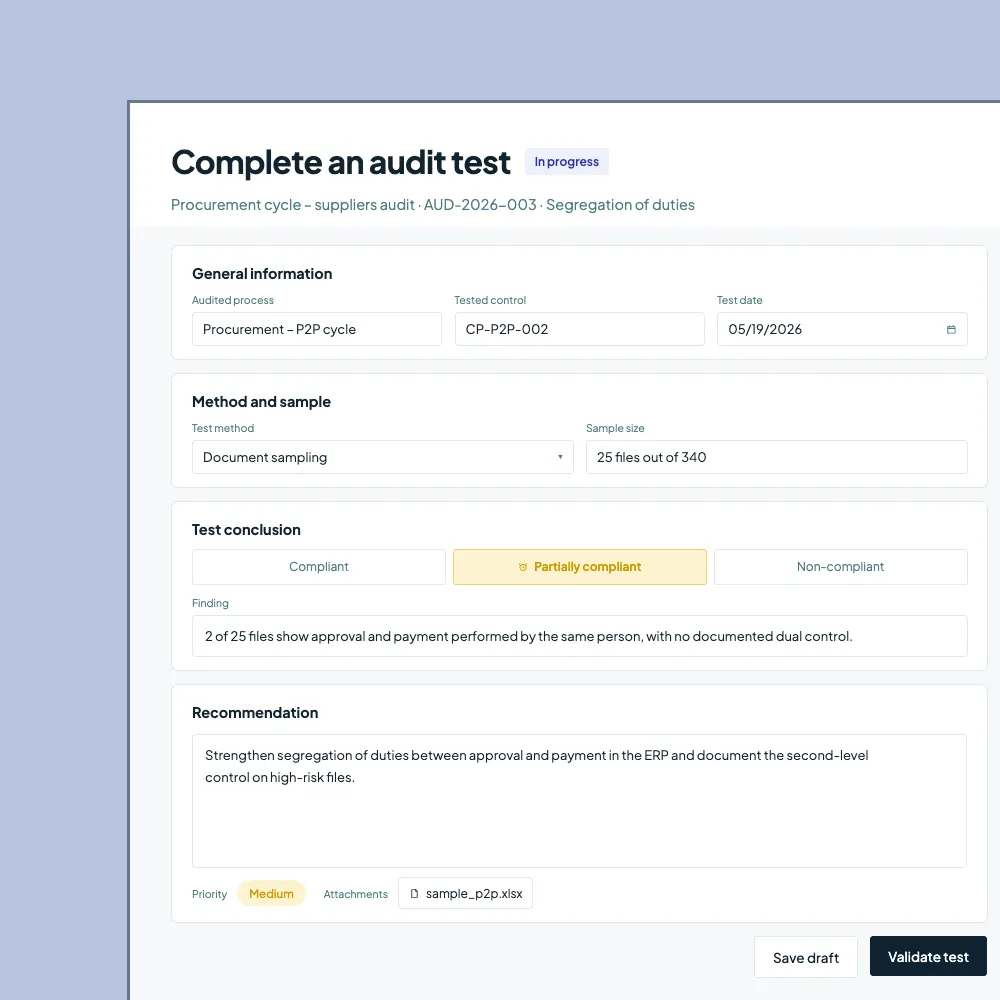
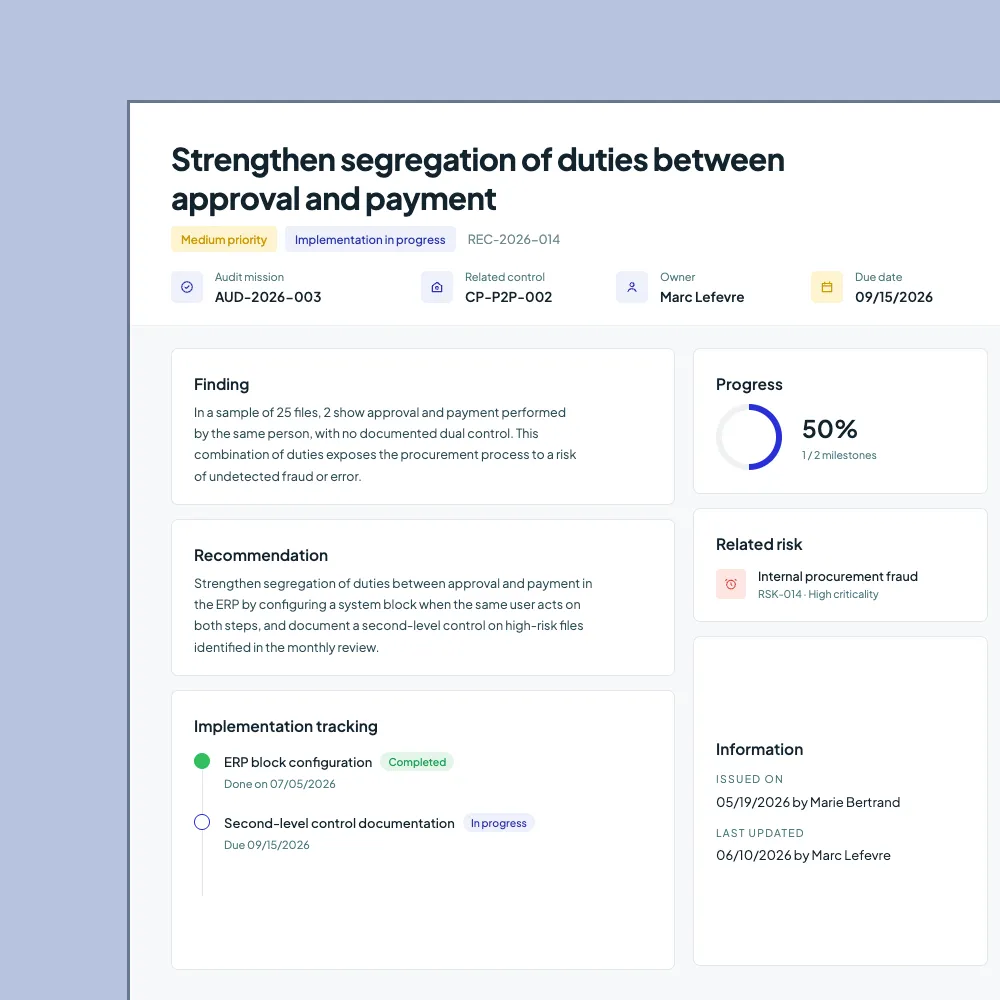
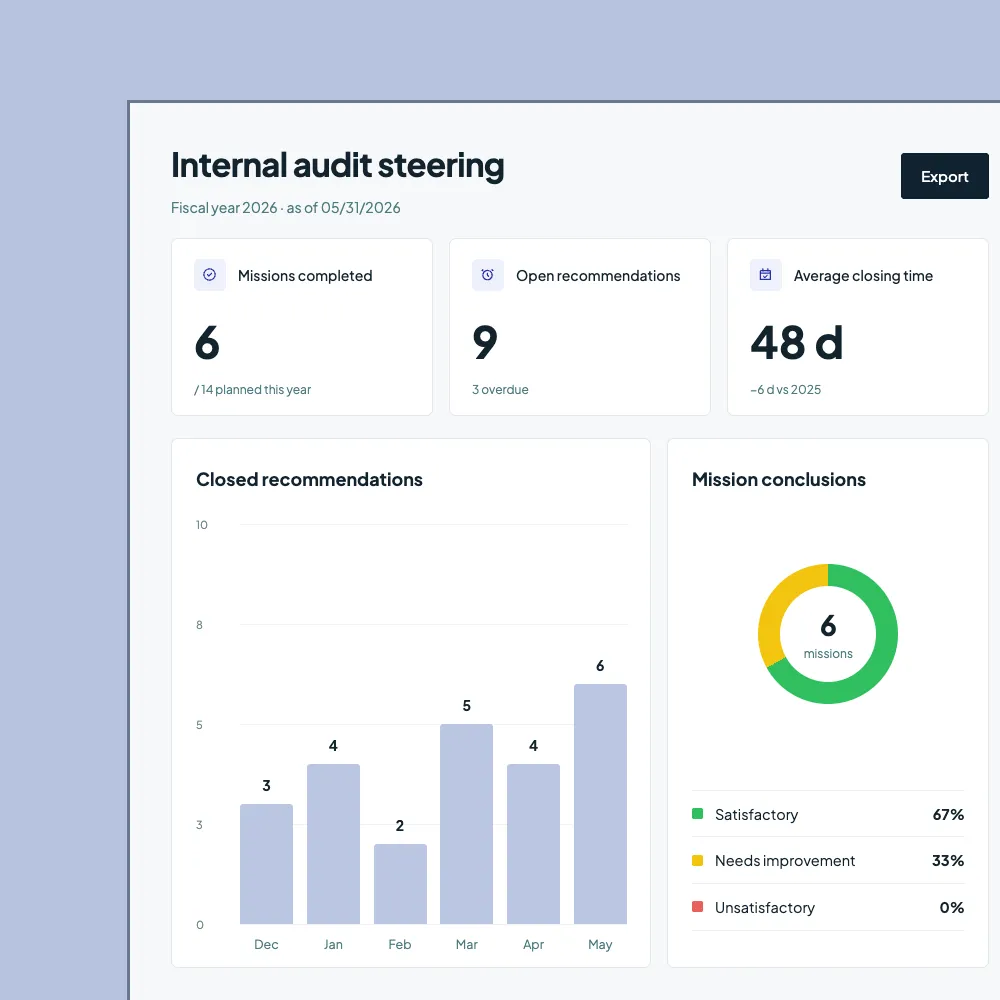
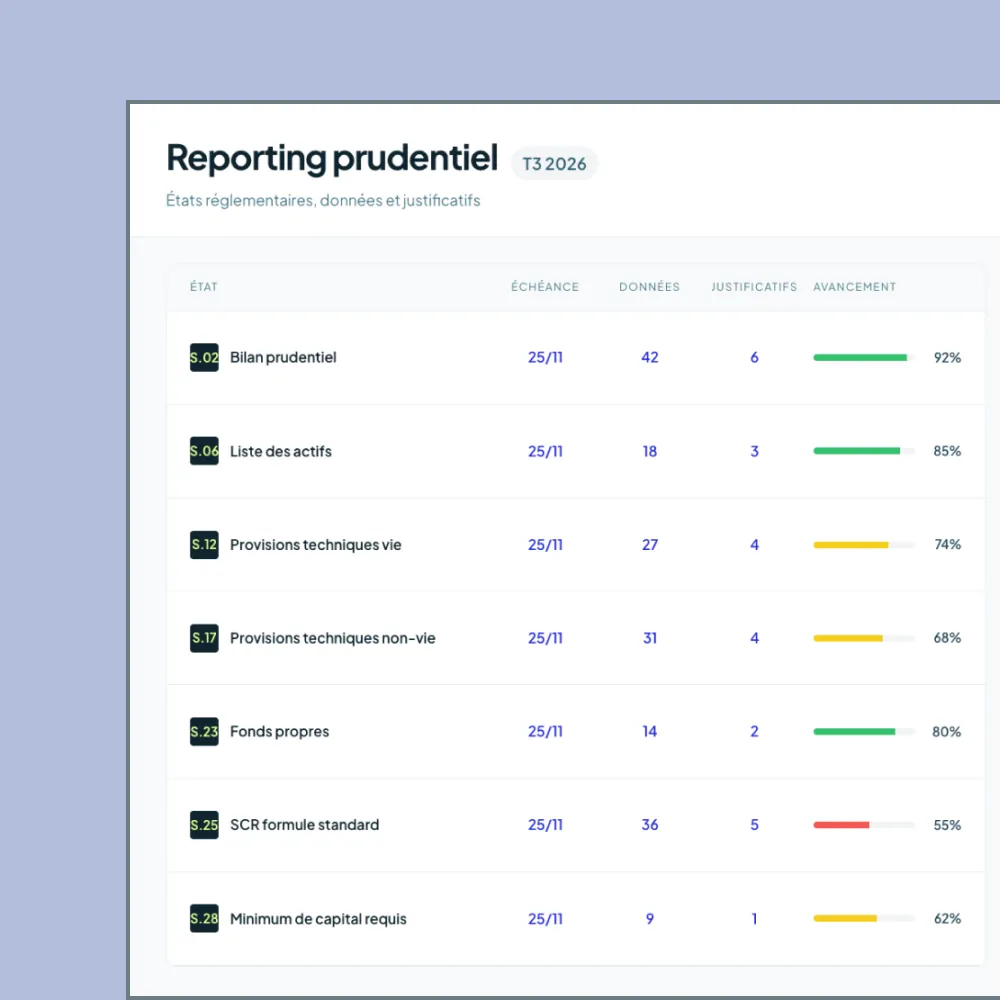
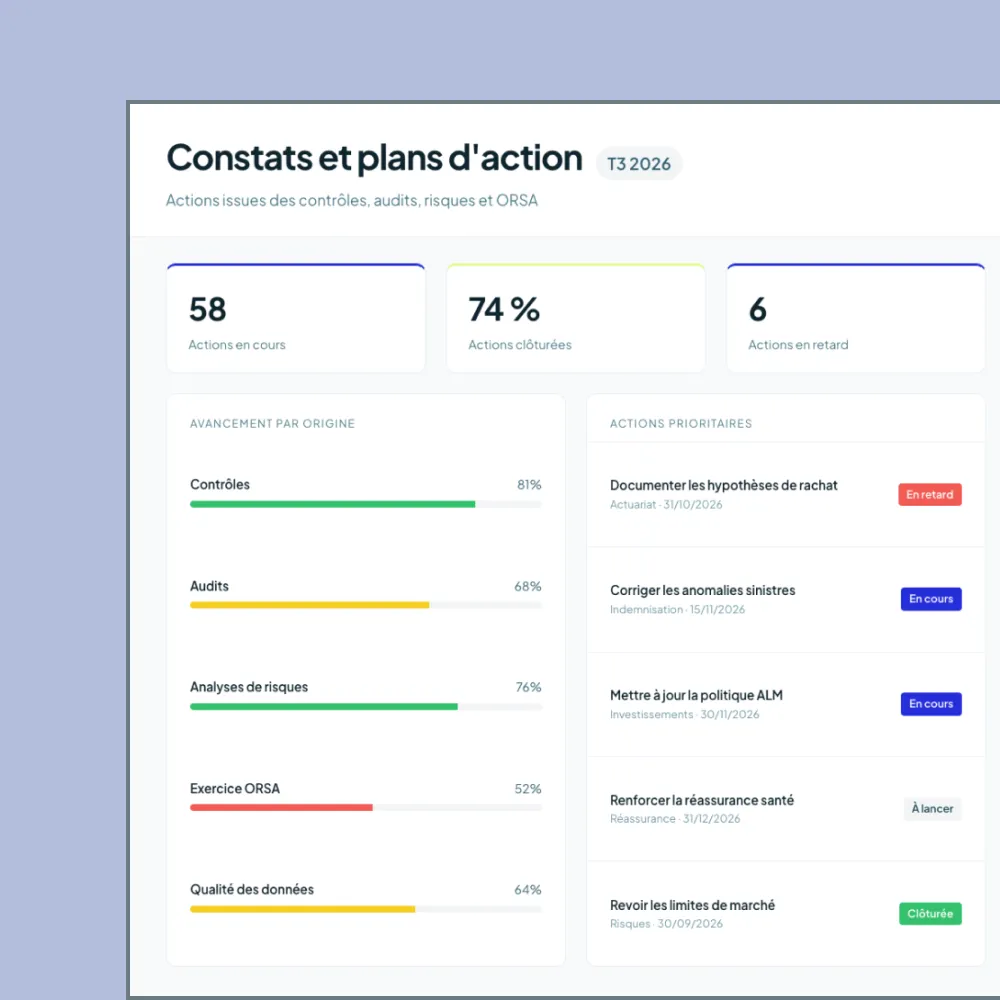
From your existing framework to effective prudential governance
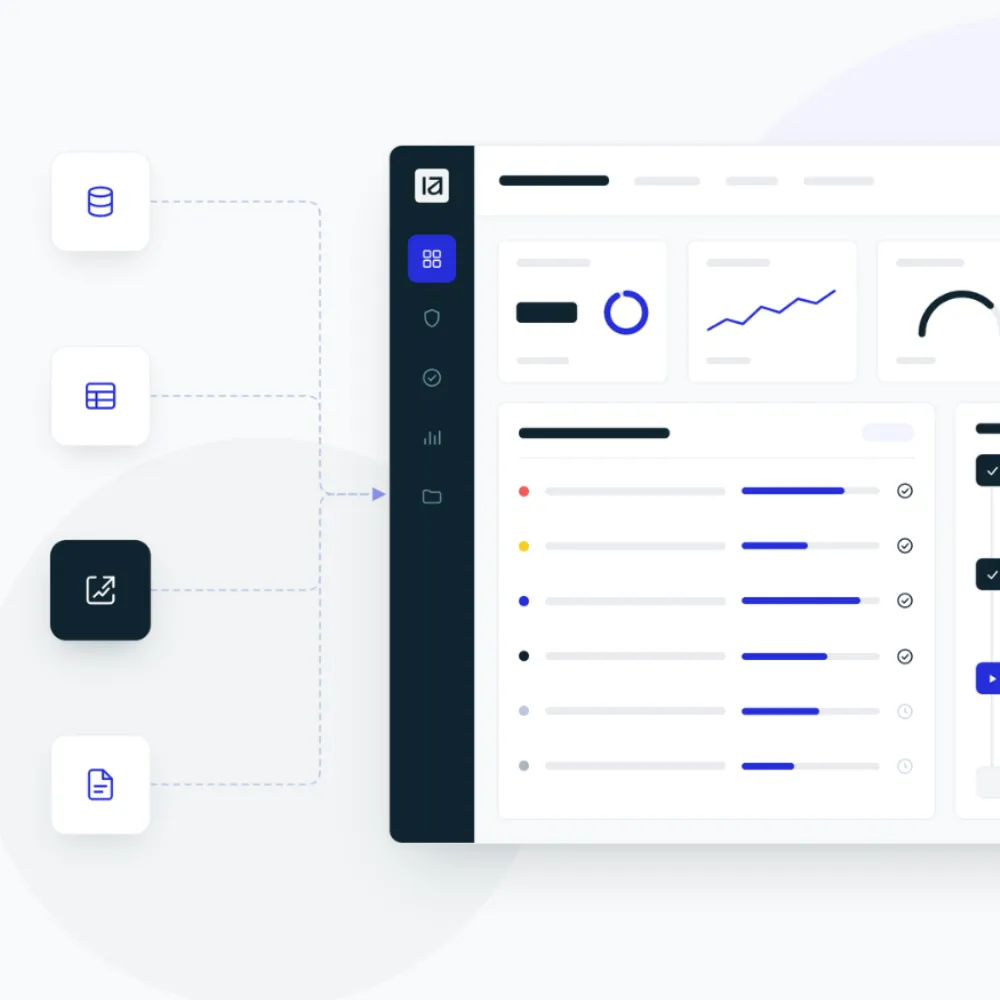

OTHER SOLUTIONS
Connect Solvency II to your wider governance framework
Solvency II involves risk management, internal control, data, reporting and governance functions. Iskera connects these areas in one shared environment.
See Iskera in action
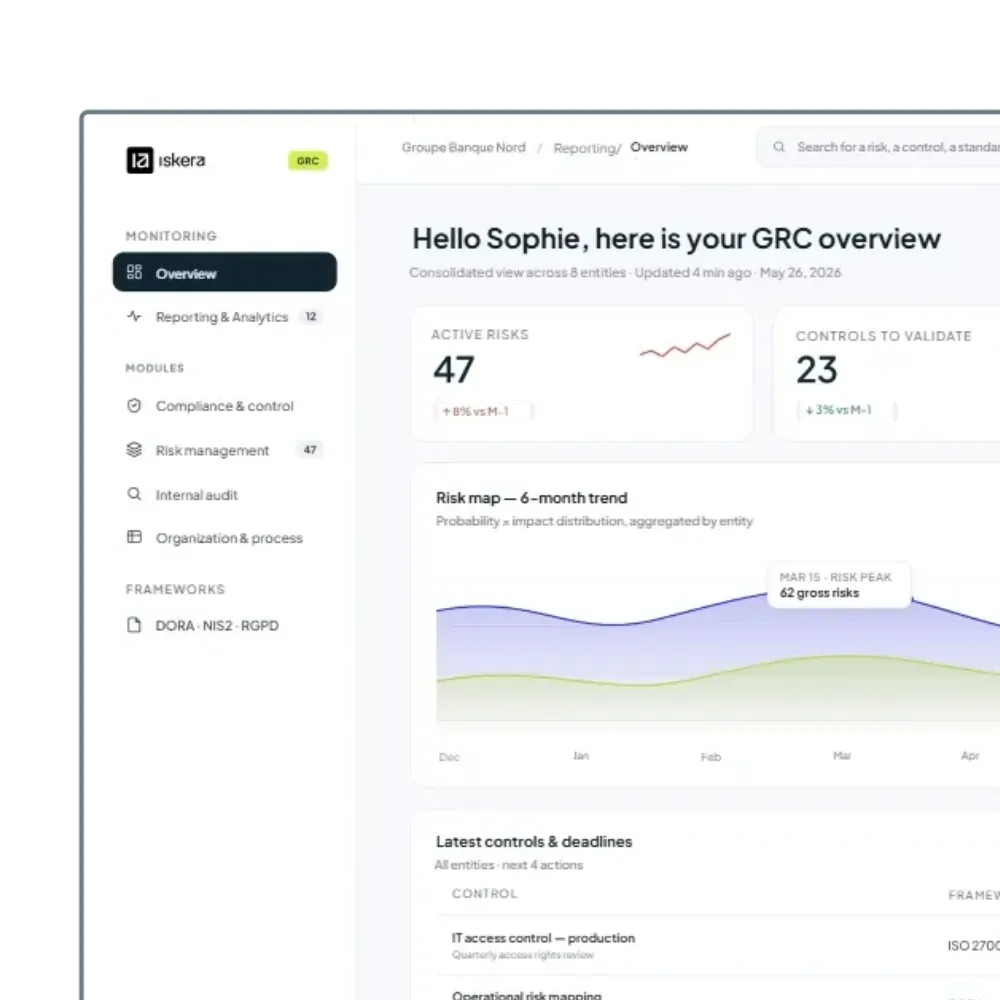
See how to centralize risks, structure your ORSA, manage controls and track prudential obligations with reliable data.

Latest resources
Frequently asked questions
Solvency II is the prudential regulatory regime for insurance and reinsurance undertakings in the European Union. Applicable since 2016, it uses a risk-based approach to safeguard policyholders and beneficiaries.
Pillar 1 covers quantitative requirements, asset and liability valuation, and capital requirements. Pillar 2 covers governance, risk management and ORSA. Pillar 3 covers supervisory reporting and public disclosure.
The Solvency Capital Requirement (SCR) reflects an insurer's risk-based capital requirement. The Minimum Capital Requirement (MCR) is the minimum level of eligible own funds. The framework generally places the MCR within a corridor of 25% to 45% of the SCR, subject to an absolute floor.
The Own Risk and Solvency Assessment (ORSA) is an insurer's internal assessment of its risks and solvency. It considers overall solvency needs, risk profile, risk tolerance and strategy, and should inform strategic decision-making.
Solvency II includes quantitative reporting, information submitted to supervisors, ORSA reporting and public disclosures such as the Solvency and Financial Condition Report (SFCR).
Directive (EU) 2025/2 introduces changes covering proportionality, reporting, long-term guarantee measures, macroprudential tools, sustainability risks, and supervision of groups and cross-border activities. Associated EIOPA guidelines are expected to apply from 30 January 2027.
Insurers can review governance, risk registers, reporting processes, proportionality arrangements and data traceability. Centralizing this information helps identify impacts and track changes ahead of the revised framework.
Iskera provides tools to manage risks, controls, responsibilities, data, documents, reporting and action plans. Compliance ultimately depends on the framework's design, effective implementation and the requirements applying to each organization.