Process
Turn your business processes into a clear, connected operating model
Bring all your business processes together in one platform.
Map activities, clarify ownership, document every step, and connect processes to risks, controls, documents, and regulatory requirements for a consistent view of how your organization operates.
.webp)
Make processes the backbone of your governance
Processes show how work gets done across your organization. A clear process map makes responsibilities easier to understand and reveals how teams, activities, and functions interact.
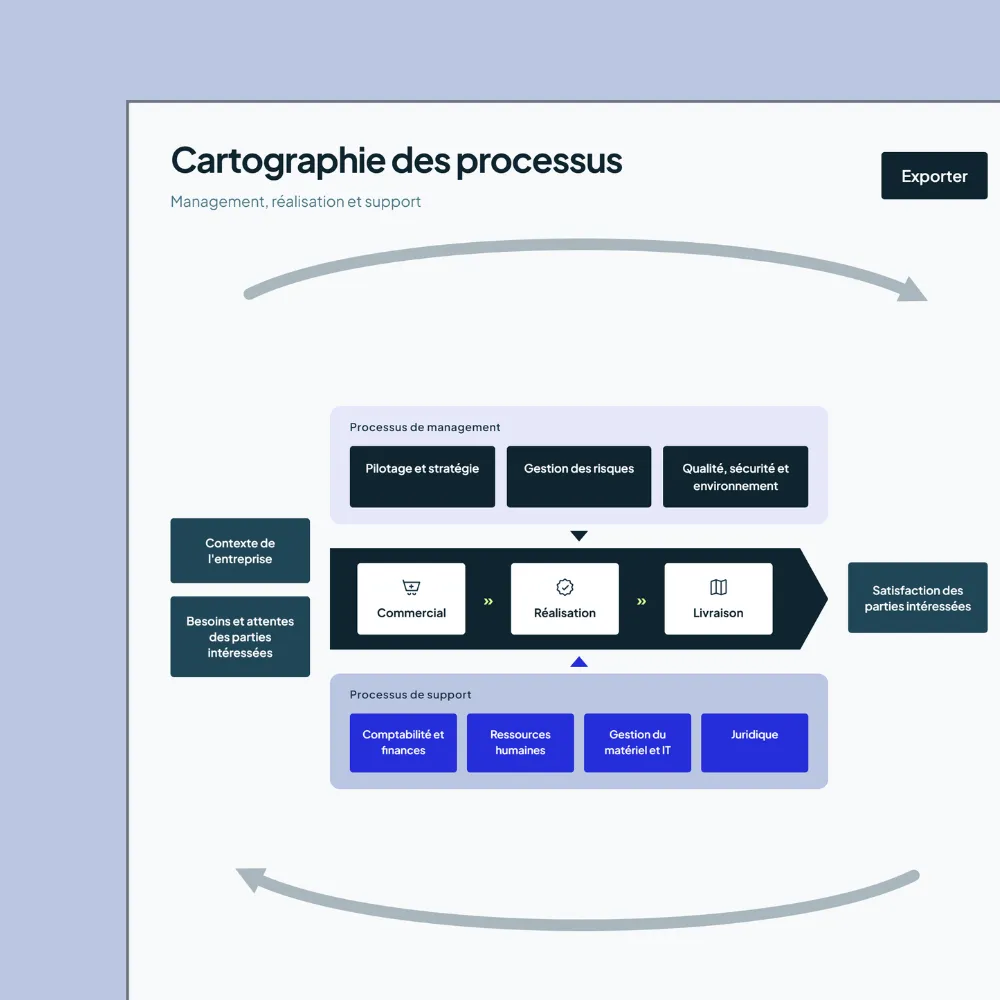
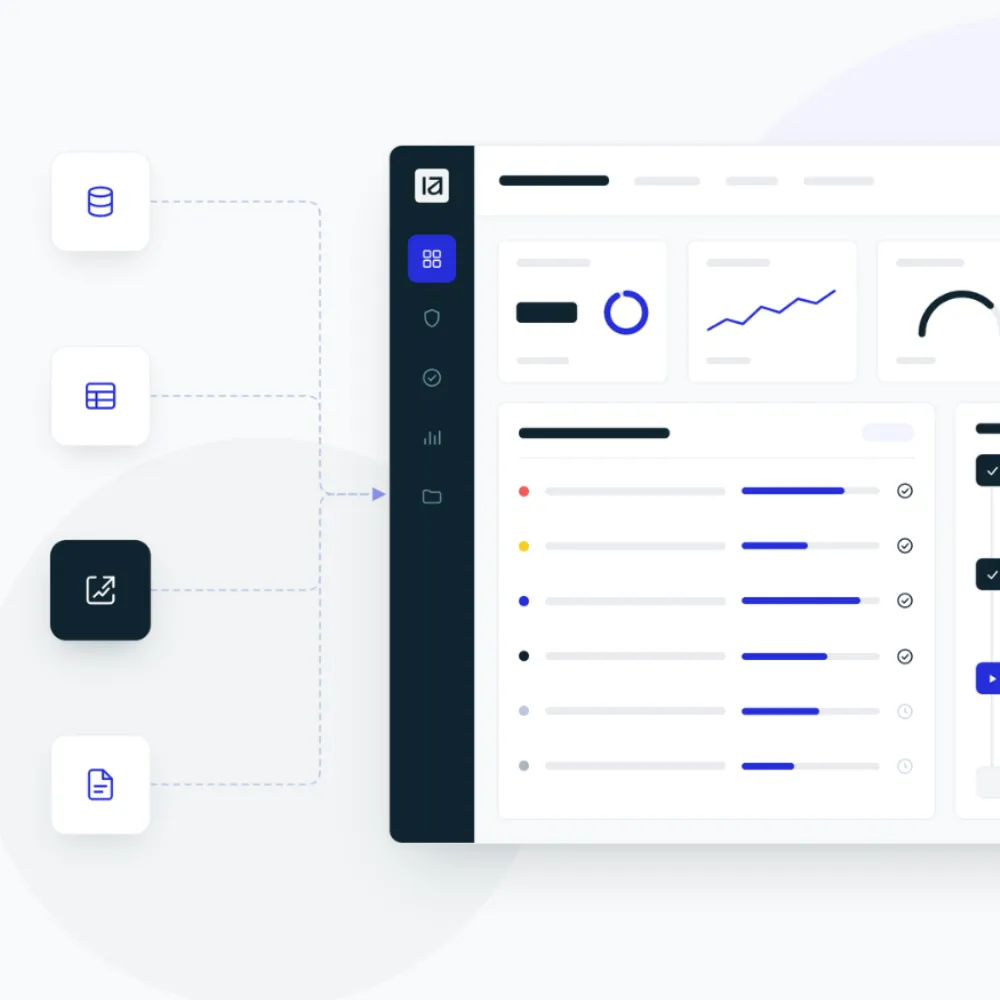
Give every team one source of truth for processes
Bring every business process into a single repository accessible across the organization.
Structure processes consistently, make them easy to navigate, and connect them to their wider context so everyone shares the same view of how the organization works.
- Centralized process repository
- Simple search and navigation
- Shared access across teams
.webp)
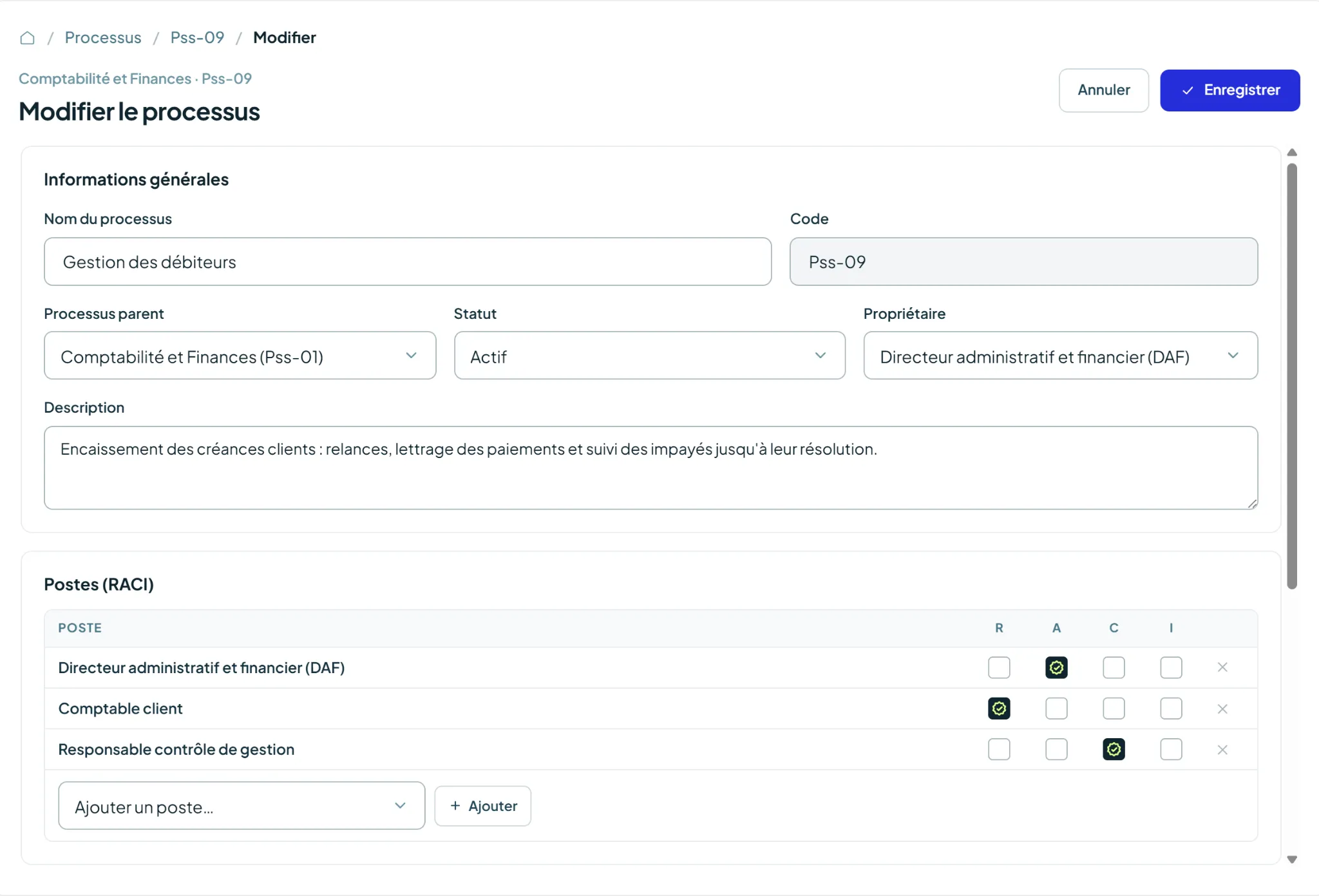
Map processes without the complexity
Create and update processes through an intuitive visual interface. Multiple views are generated automatically from the same source of information, keeping process maps consistent and up to date.
- Intuitive visual editor
- Automatically generated views
- Centralized updates
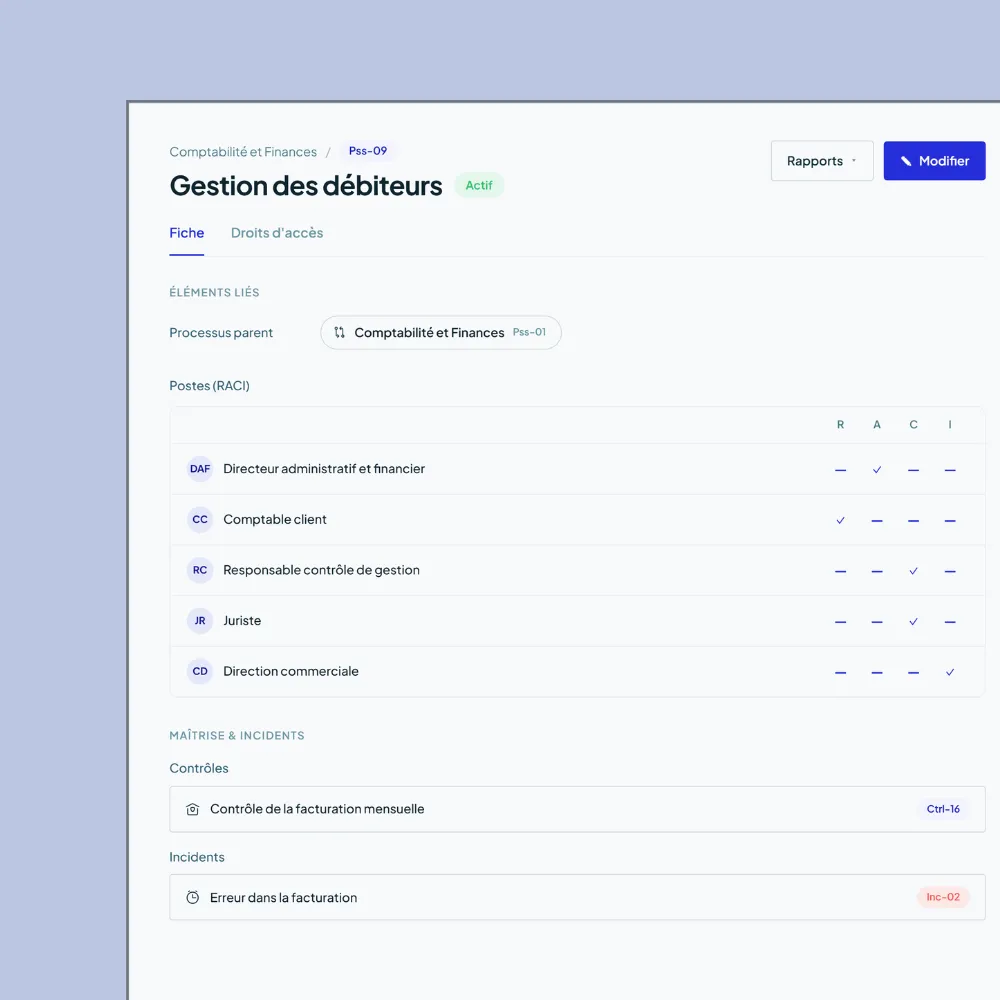
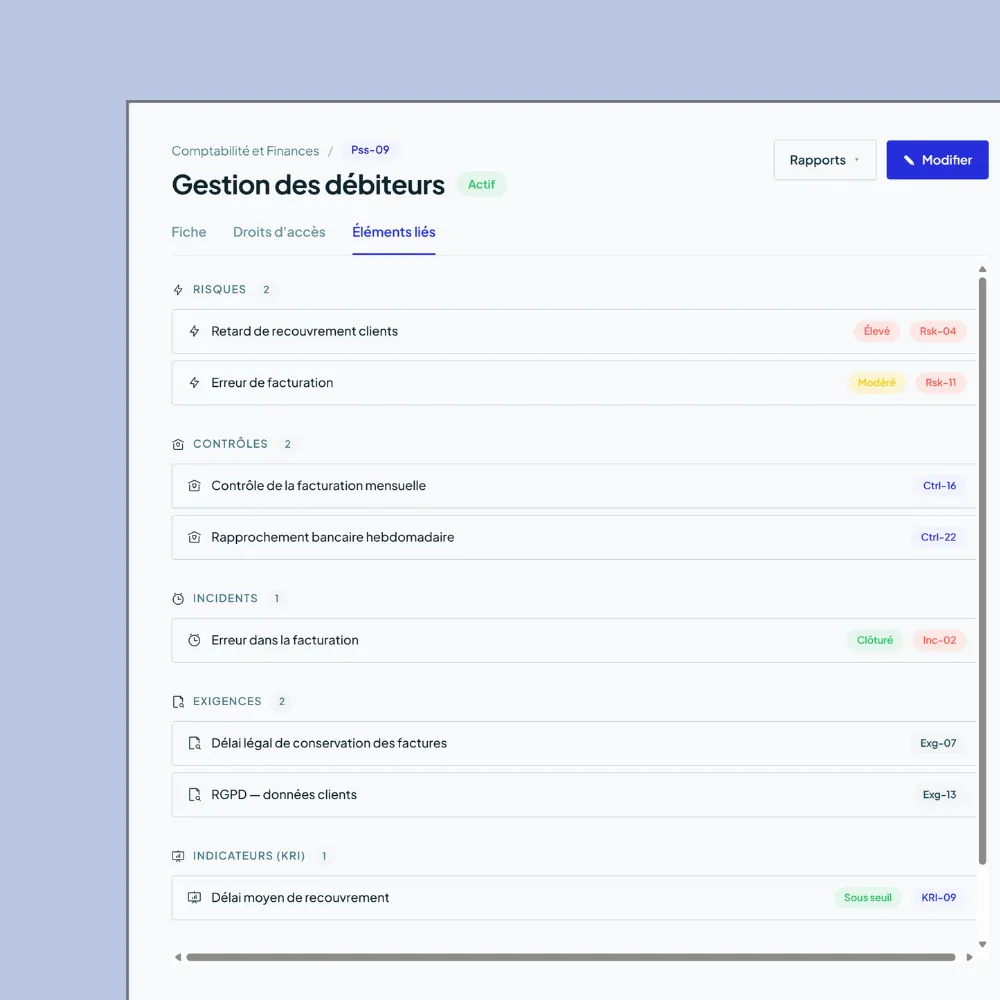
Connect every process to the bigger picture
Link each process to its owners, risks, controls, regulatory requirements, documents, indicators, and applications.
Build a cross-functional view of your organization and quickly understand the impact of every change.
- Connections across your GRC framework
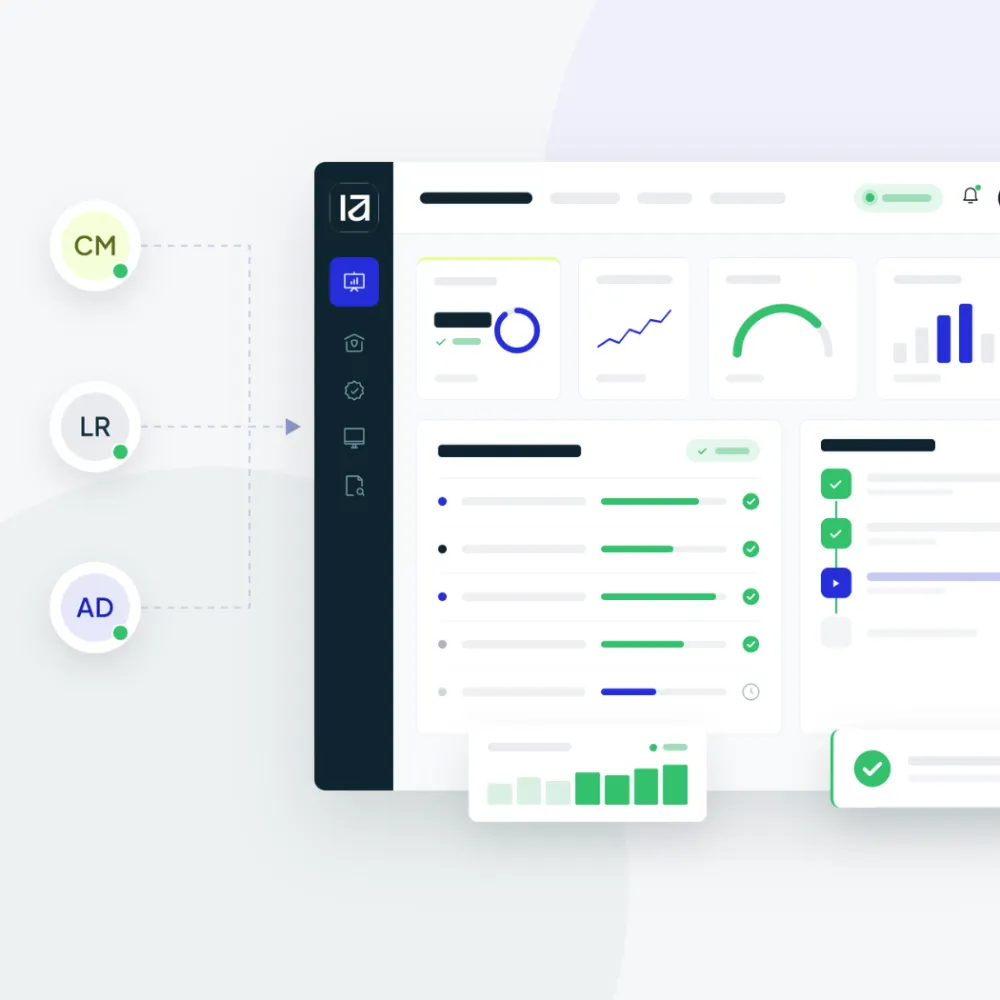
- Responsibility matrix
- Dependency analysis
.webp)
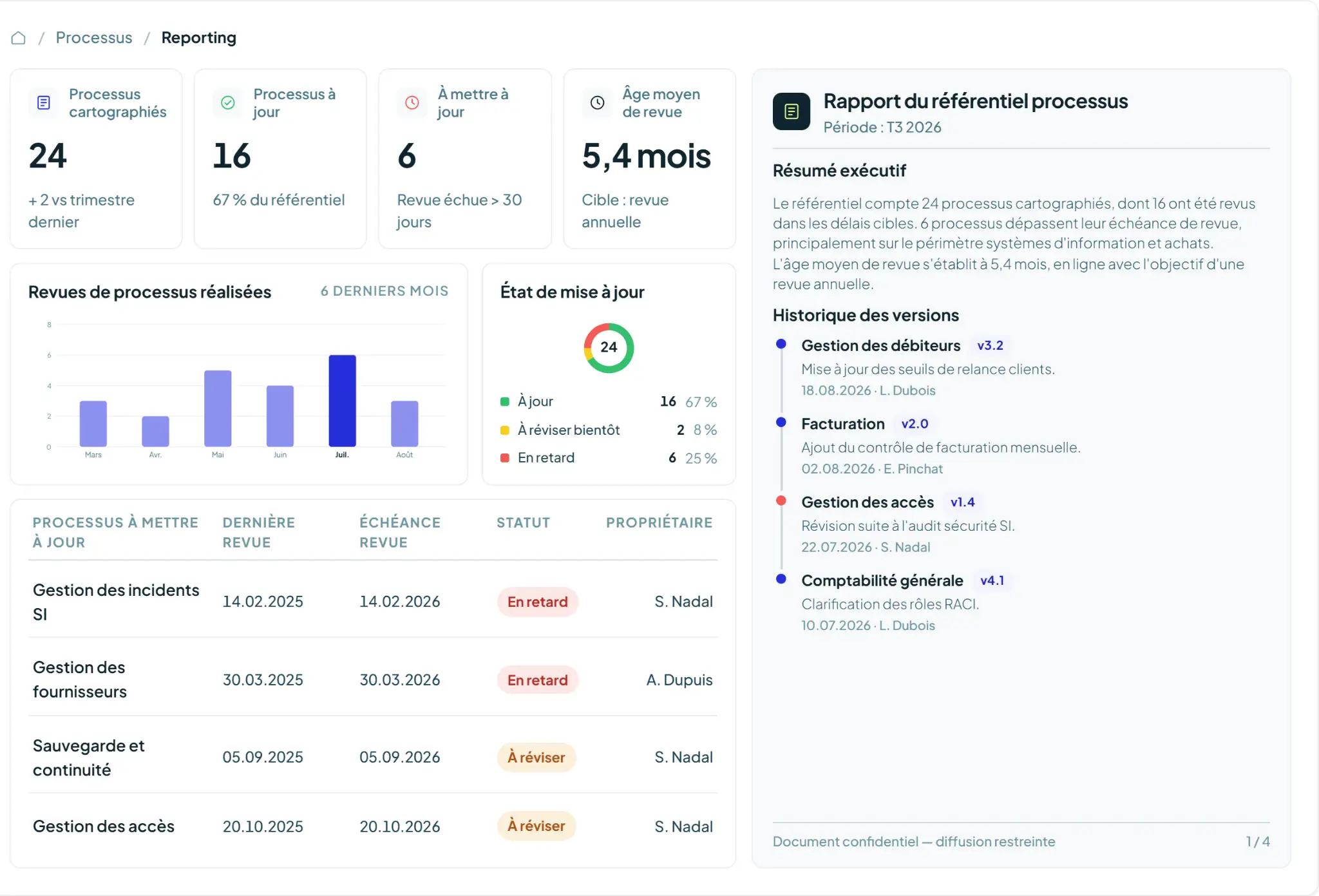
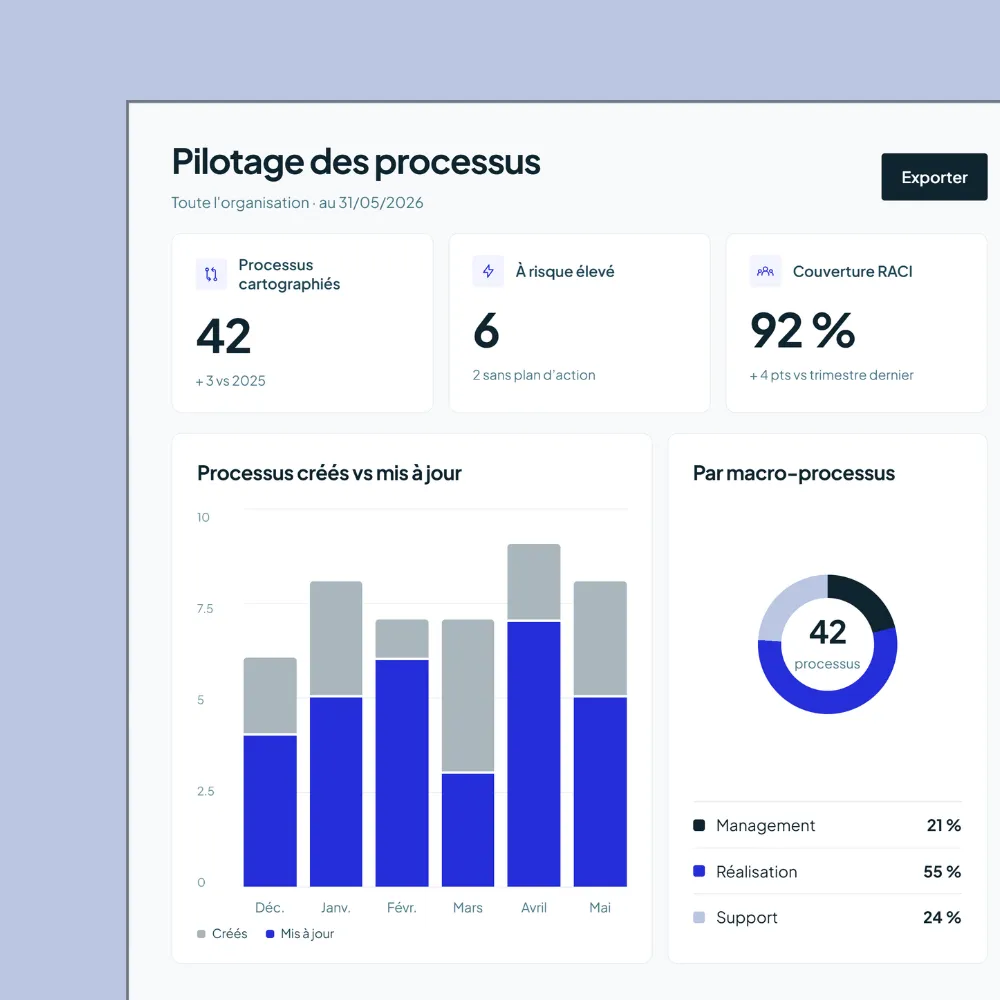
Keep every process controlled and up to date
Track process versions, manage approvals, automatically notify the right people, and monitor how your operating model evolves through interactive dashboards and AI-assisted analysis.
- Version control and history
- Approval workflows and notifications
- Reporting and AI-assisted analysis
Turn your processes into a driver of performance

100%
of your processes centralized in one platform
- 01
Make your organization easier to understand
See how activities, teams, and responsibilities interact. Give employees a shared view of how the organization operates and easy access to the information they need.
- 02
Strengthen governance through connected processes
Connect processes to risks, controls, regulatory requirements, documents, and indicators to build a consistent governance framework that is easier to manage.
- 03
Update once. Keep every view aligned.
Changes to a process automatically flow through its related views. Reduce manual updates, prevent inconsistencies, and keep your process repository easier to maintain.
- 04
Keep a complete history of every process
Retain version history, track approvals, and review changes over time. Maintain the evidence you need for audits and demonstrate control over your operating model.
Build a living process map in 3 steps
Centralize your processes, structure how your organization works, and connect everything to your wider GRC framework for a clear, always up-to-date view.
01
Map your business processes
Identify your organization's processes, organize them by business area, function, or team, and define their interactions to build a process map that reflects how you operate.
02
Add context to every process
Document each process, assign owners, and connect it to risks, controls, documents, regulatory requirements, and indicators to build a complete, consistent repository.
03
Keep your process repository alive
Update processes as your organization evolves, manage approvals, retain version history, and automatically share changes with the people concerned.
Everything you need to map and manage processes with confidence
From scattered process documentation to one operational framework

OTHER SOLUTIONS
Connect processes to your wider governance framework
Processes become more valuable when connected to risks, controls, audits, requirements, and documentation.
Iskera brings everything together in one platform to keep governance consistent and up to date.
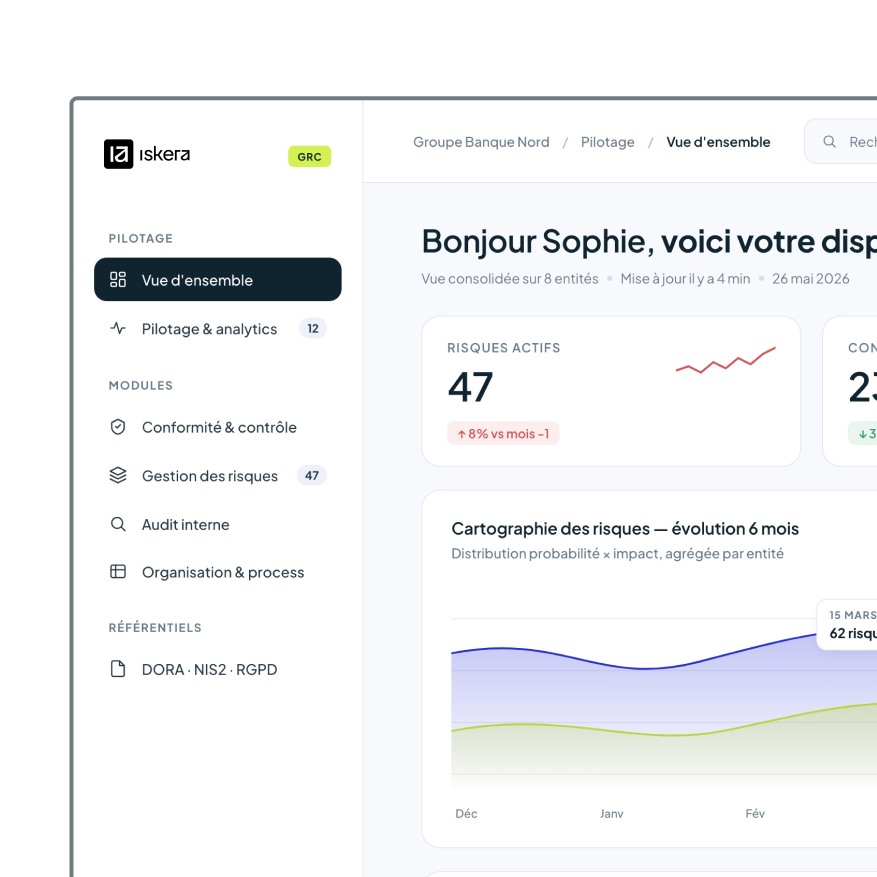
A demo that speaks your language, a clear vision as a result
See how Iskera helps you map business processes, clarify responsibilities, connect processes to risks and regulatory requirements, and keep your operating model continuously up to date.

Latest resources
Frequently asked questions
Process modeling software visually represents how an organization operates. It helps teams map activities, interactions, responsibilities, and workflows to better understand, manage, and improve business processes.
A process describes a set of activities that contribute to a business objective, while a procedure explains how to perform a specific task. Processes provide an end-to-end view of how work flows through the organization, while procedures document the detailed steps.
Yes. Processes can be organized by business area, department, site, subsidiary, or any structure that fits your organization. Views, templates, and associated information can be configured to match your operating model.
Pricing depends on factors such as the number of users, modules deployed, functional scope, and your organization's requirements. Contact our team for a tailored demonstration and quote.