SAPIN II
Manage your anti-corruption compliance in one platform
Centralize corruption risk assessments, third-party due diligence, controls, documents, responsibilities and action plans. Iskera connects every element of your Sapin II compliance framework for easier oversight, updates and traceability.
Iskera connects these elements so you can manage and update your compliance framework while keeping a clear record of implemented measures.
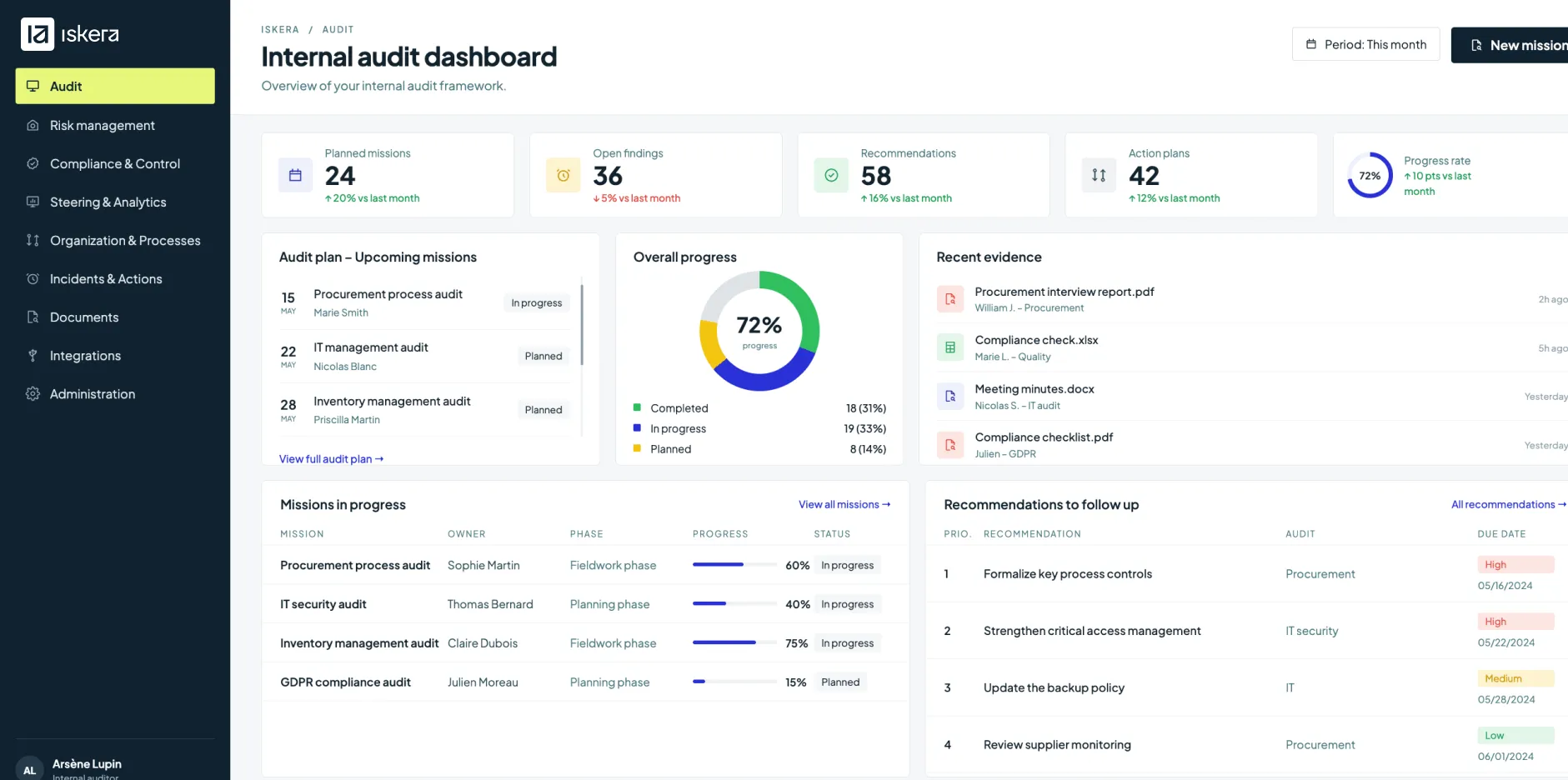
Move beyond documentation to actively managed compliance
Article 17 of France's Sapin II law requires covered companies to implement eight anti-corruption measures: a code of conduct, an internal whistleblowing system, corruption risk mapping, third-party due diligence, accounting controls, training, disciplinary measures, and internal monitoring and assessment.
Iskera brings these elements together in one environment, helping you document and monitor your compliance framework.
Structure your corruption risk mapping
Identify exposure scenarios involving corruption and influence peddling across your operations, processes, locations and third-party relationships.
Assess risks using a consistent methodology, document mitigating controls and keep a history of assessments.
- Consolidated view of corruption risks
- Consistent methodology across entities
- Traceable assessments and updates
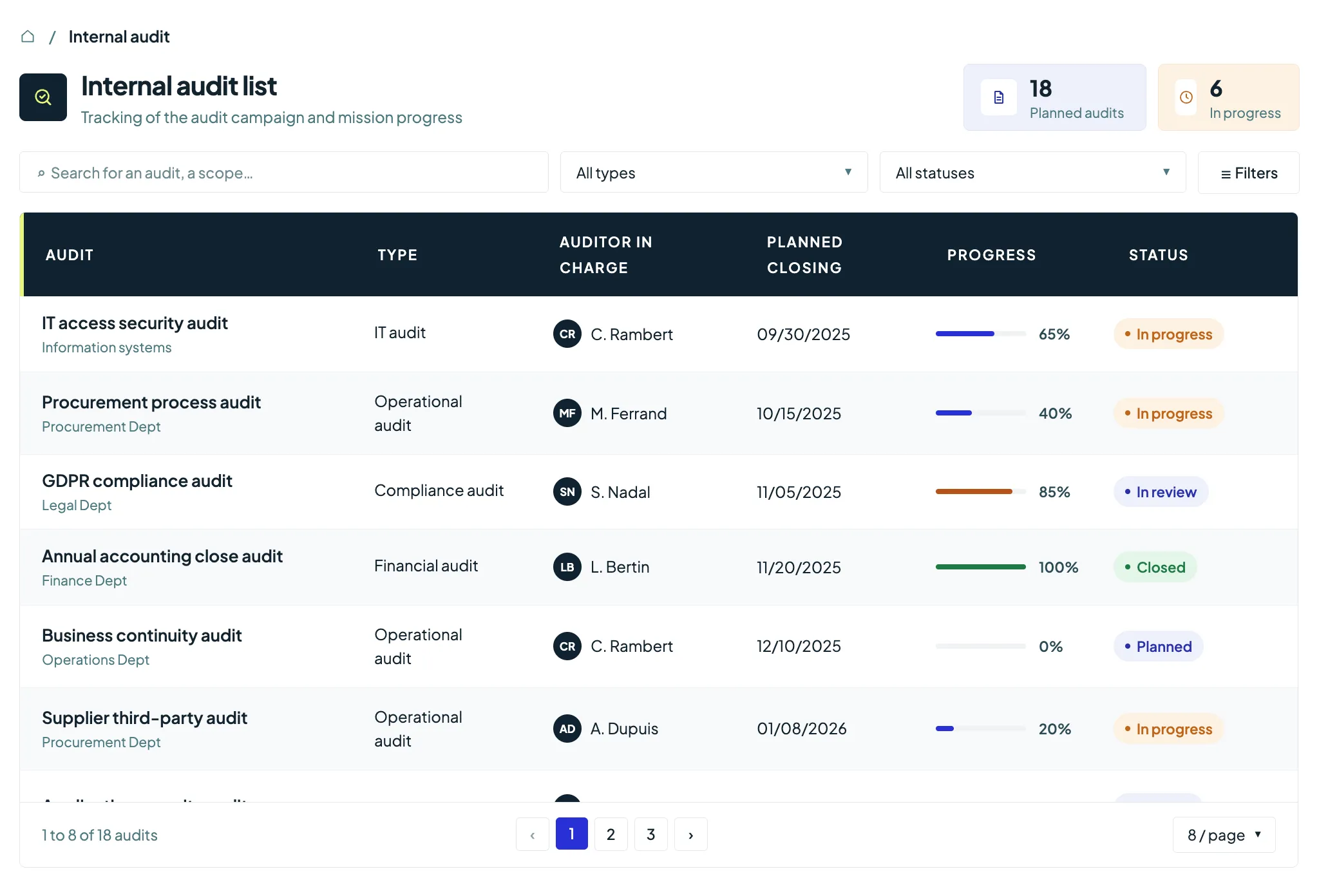
Assess third parties based on their risk
Structure due diligence for customers, suppliers, intermediaries and other business partners according to your anti-corruption risk criteria. Centralize collected information, supporting documents, assessment results and decisions to maintain a clear audit trail.
Keep collected information, supporting documents, assessment results and decisions together to maintain a clear audit trail.
- Risk-based third-party prioritization
- Consistent assessment criteria
- Centralized reviews and supporting evidence
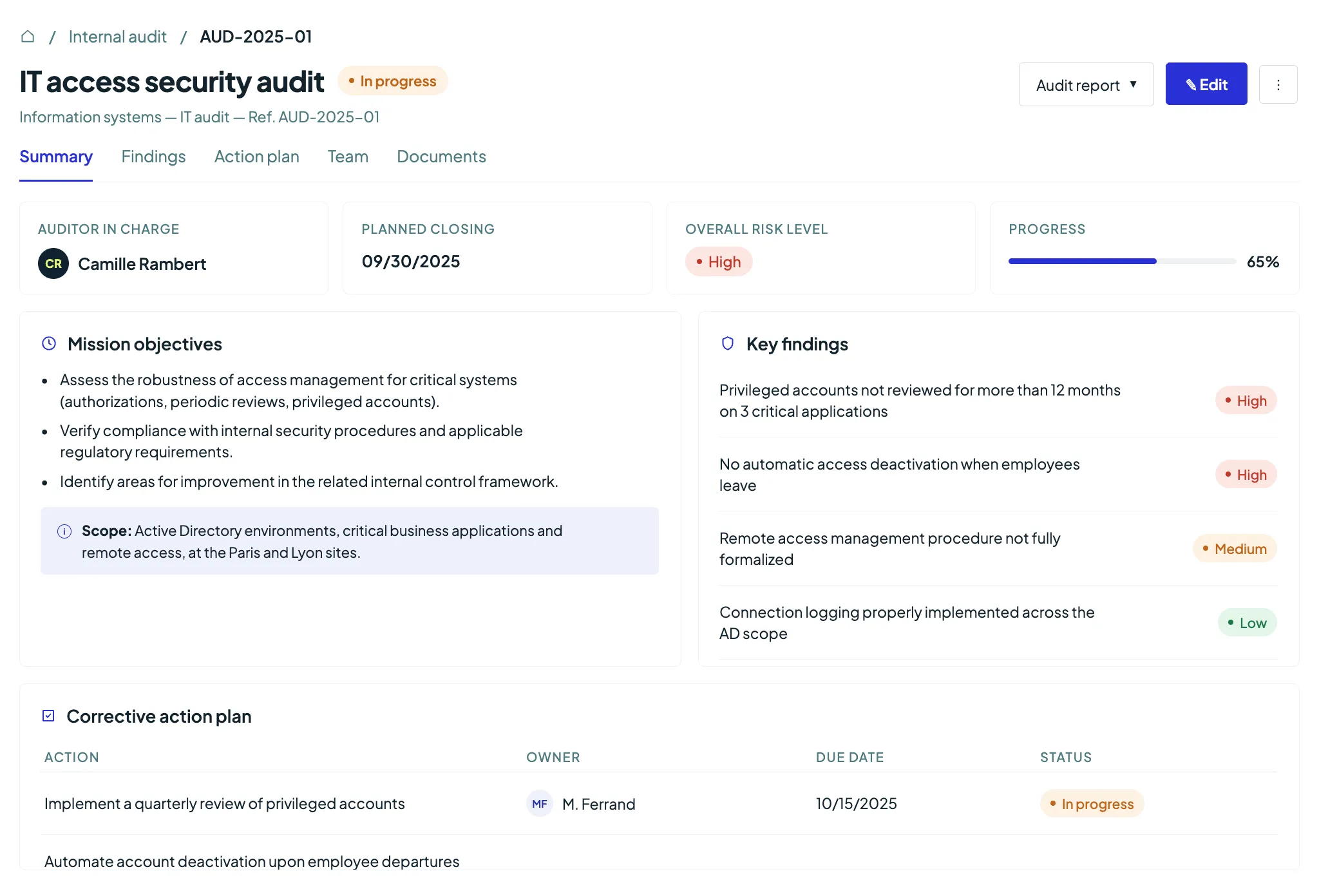
Link controls to identified risks
Build your control plan around the risks in your corruption risk map. Link each control to the relevant processes, risks, owners, frequencies and evidence. Include anti-corruption accounting controls and monitor their completion.
Include anti-corruption accounting controls and track their completion over time.
- Controls linked directly to risks
- Recorded results and supporting evidence
- Gaps converted into action plans
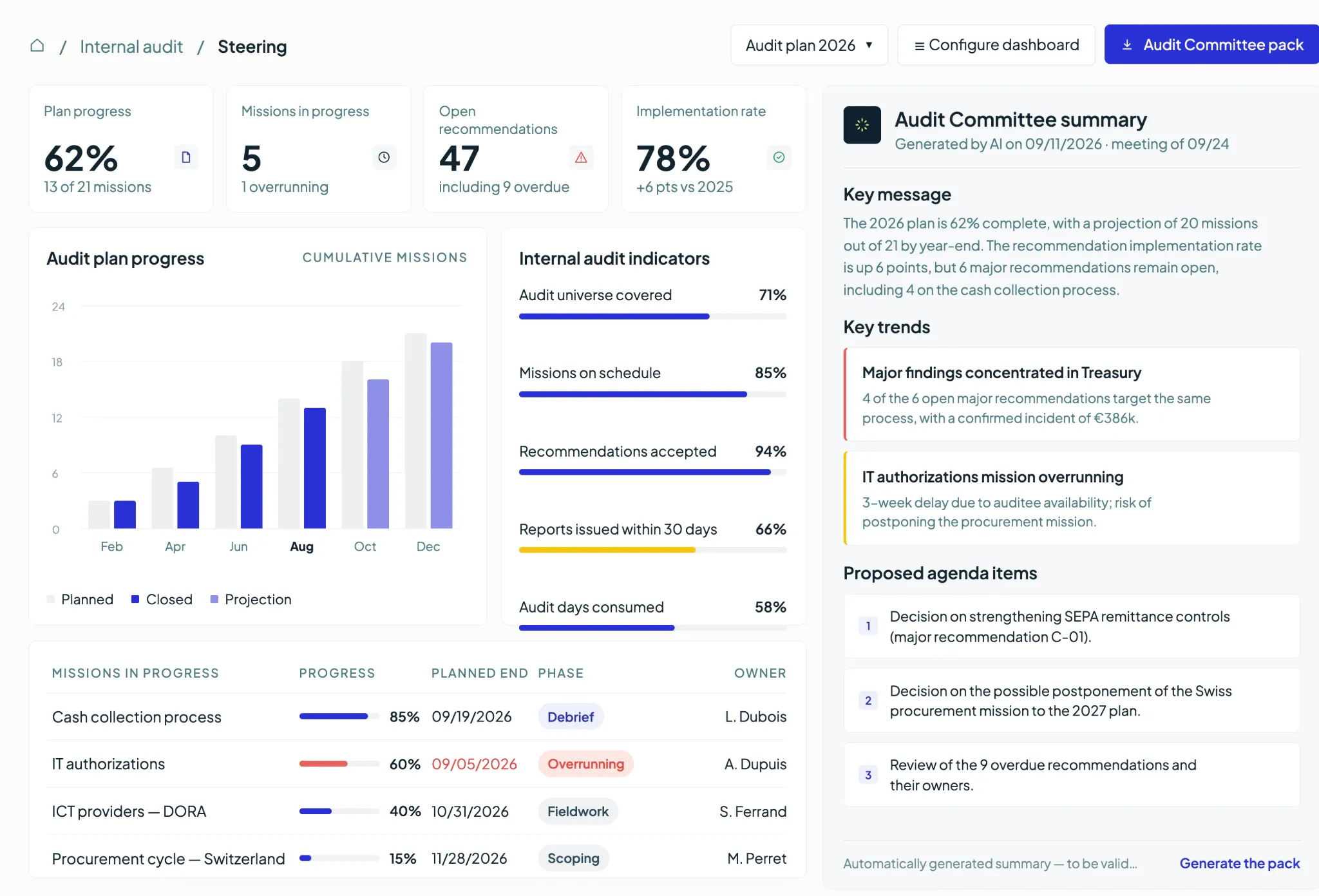
Monitor your compliance framework
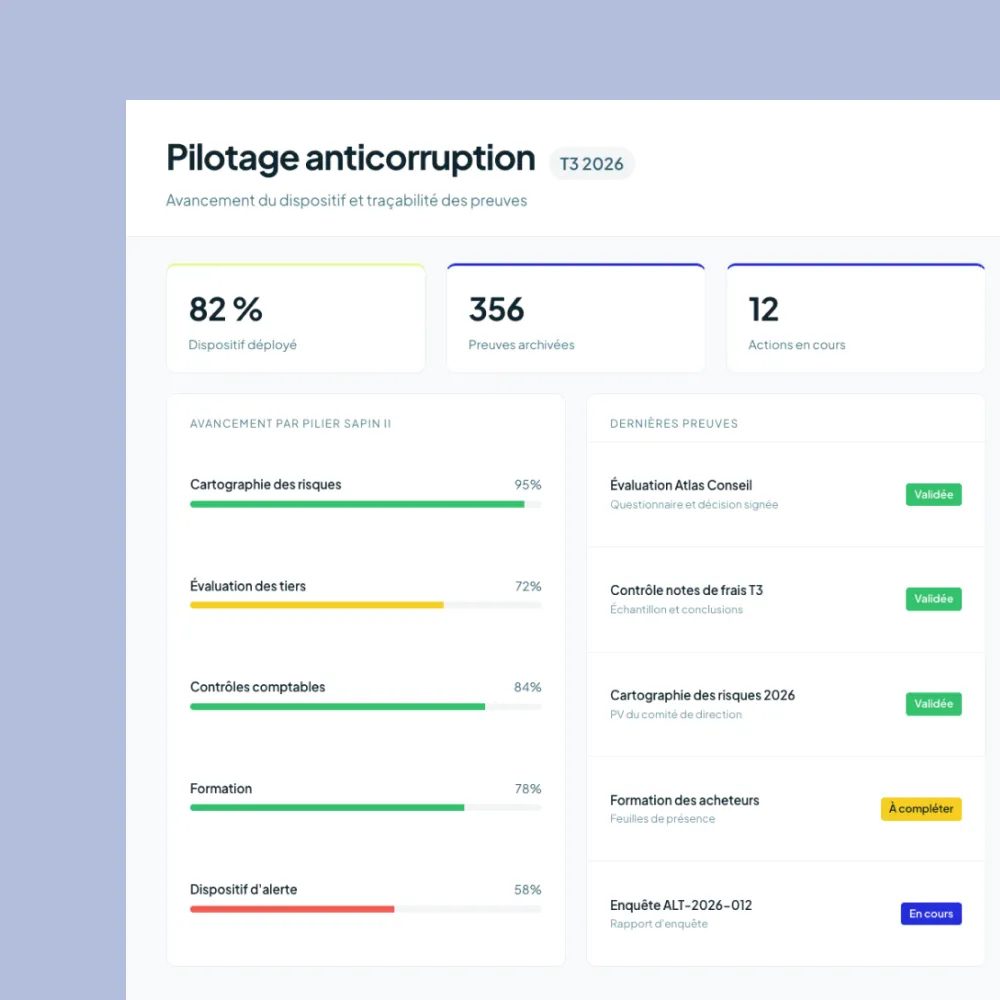
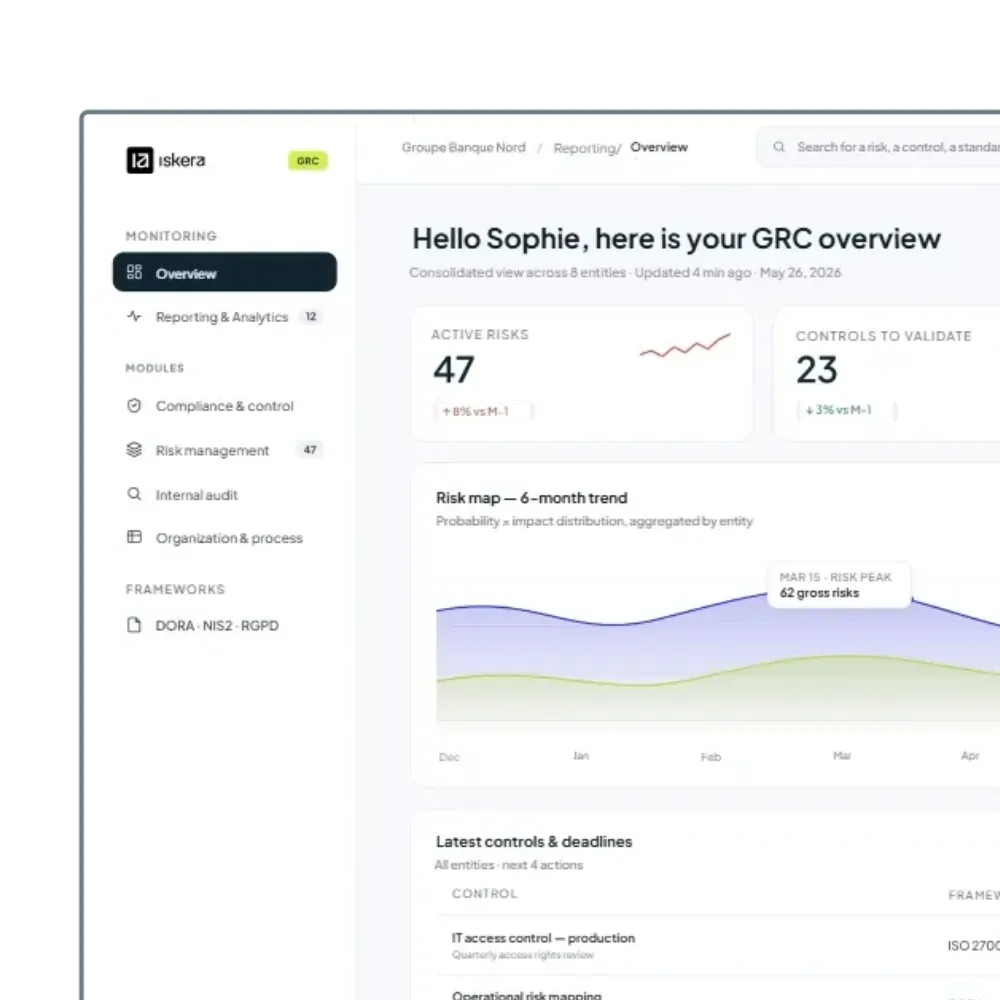
Get a consolidated view of risks, controls, third-party assessments, documents and actions. Dashboards highlight measures requiring attention, upcoming deadlines and missing documentation.
Dashboards help you identify measures to strengthen, upcoming deadlines and outstanding documentation.
- Progress by entity or owner
- Key issues identified
- Consolidated management reporting
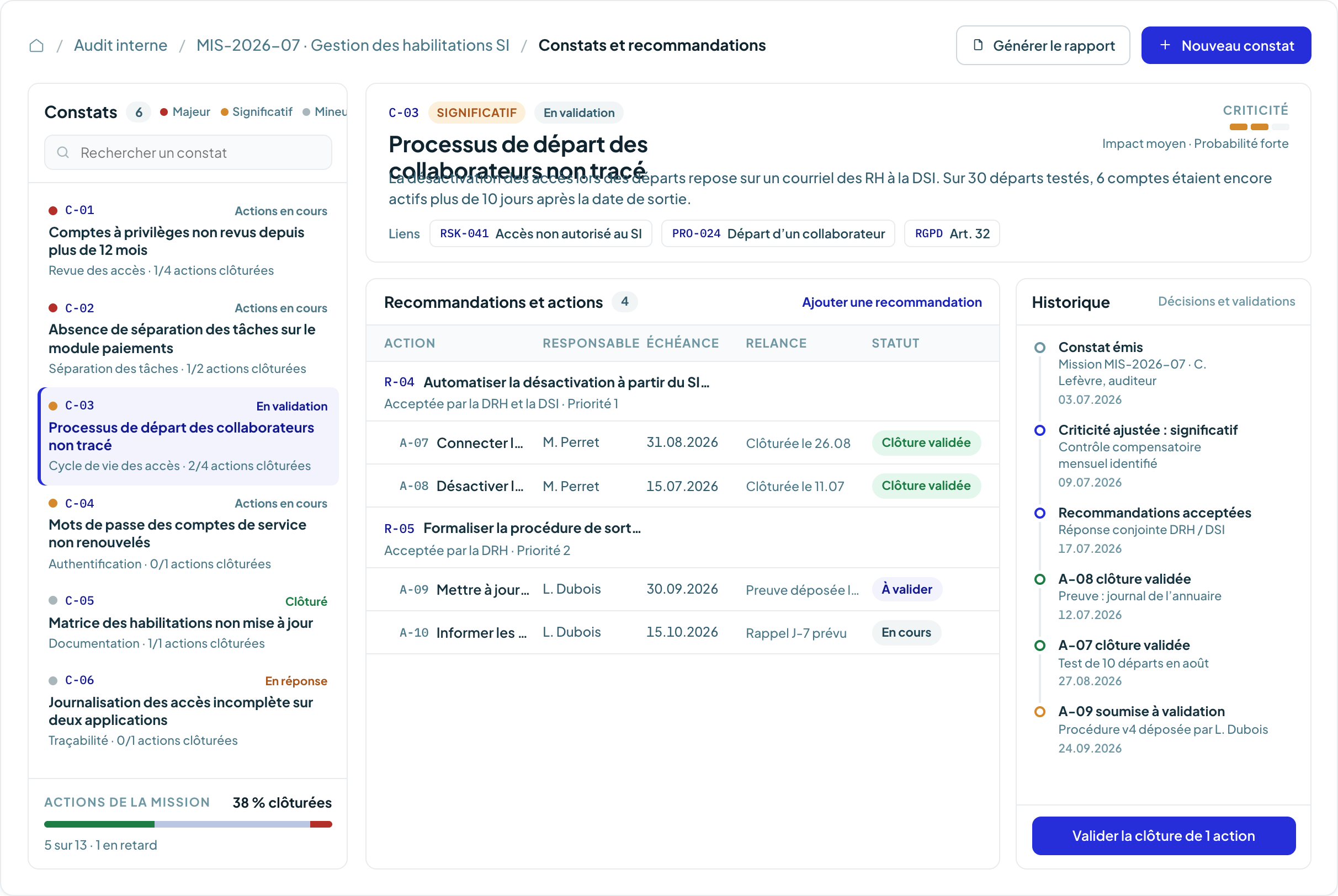
A more structured and traceable anti-corruption framework

100%
of your Sapin II measures managed within one connected framework
- 01
Risk mapping that's easier to maintain
Connect corruption scenarios to activities, geographies, third parties, controls and actions to keep your risk profile up to date.
- 02
Consistent third-party due diligence
Structure assessments and retain the criteria, documents, decisions and history associated with each third party.
- 03
Controls directly linked to risks
Build your control framework around your risk map and track its implementation over time.
- 04
Compliance that's easier to demonstrate
Centralize documents, approvals, control results and action plans so you can easily retrieve evidence of implementation.
Build your Sapin II compliance framework in 3 steps
Connect risks, third parties, controls, responsibilities and evidence to manage your anti-corruption framework over time.
01
Structure your central repository
Import existing risk maps, procedures, codes of conduct, third-party lists, controls and action plans. Organize the framework by entity, activity, process or geography.
Organize your framework by entity, activity, process or geographic area.
02
Deploy anti-corruption measures
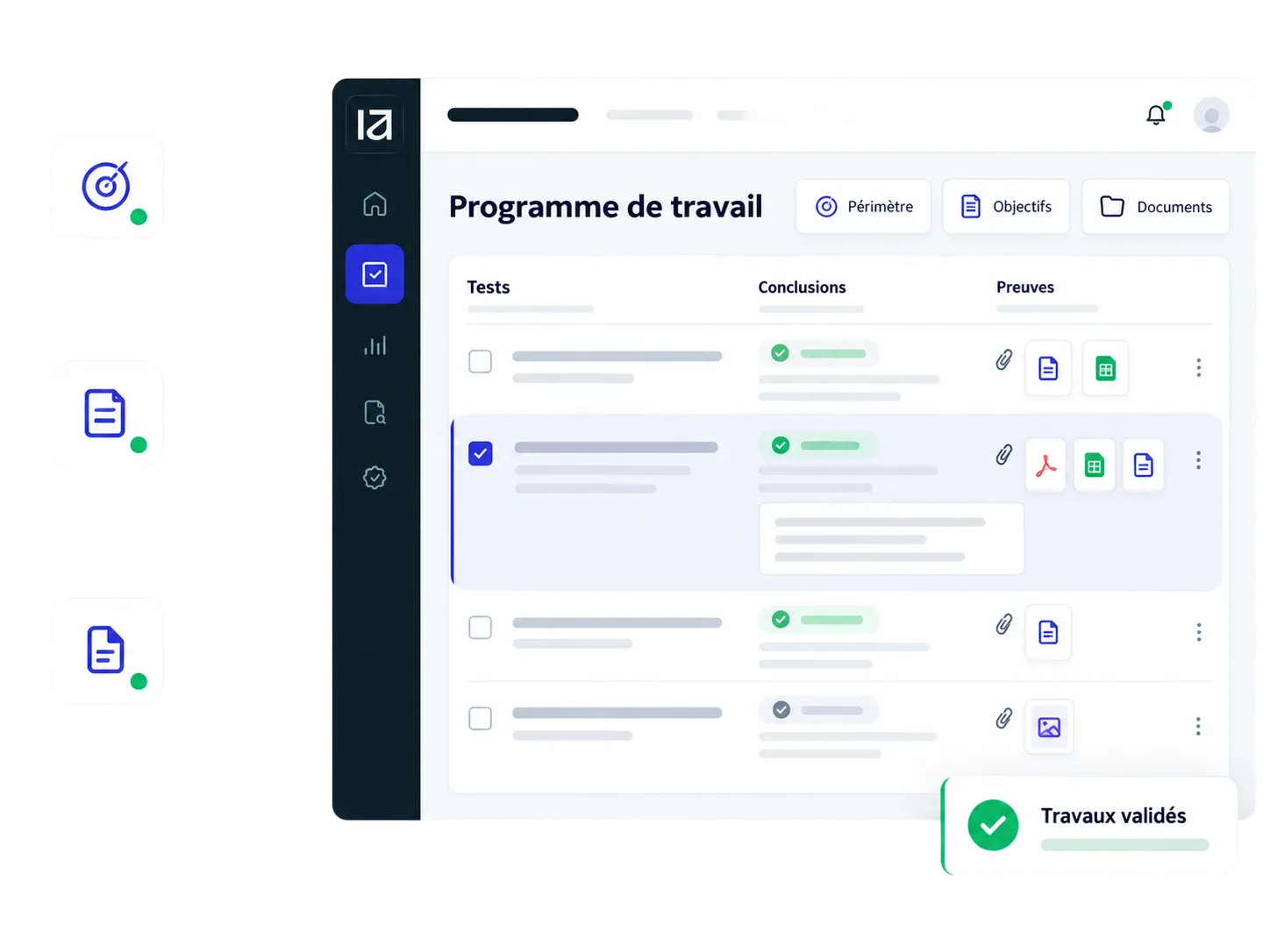
Assess risks and third parties, schedule controls, assign responsibilities and centralize evidence documenting each Sapin II measure.
03
Monitor and update your framework
Track controls, assessments, actions and deadlines. Identify areas for improvement and update your framework as your organization and risk exposure evolve.
Manage Sapin II compliance day to day
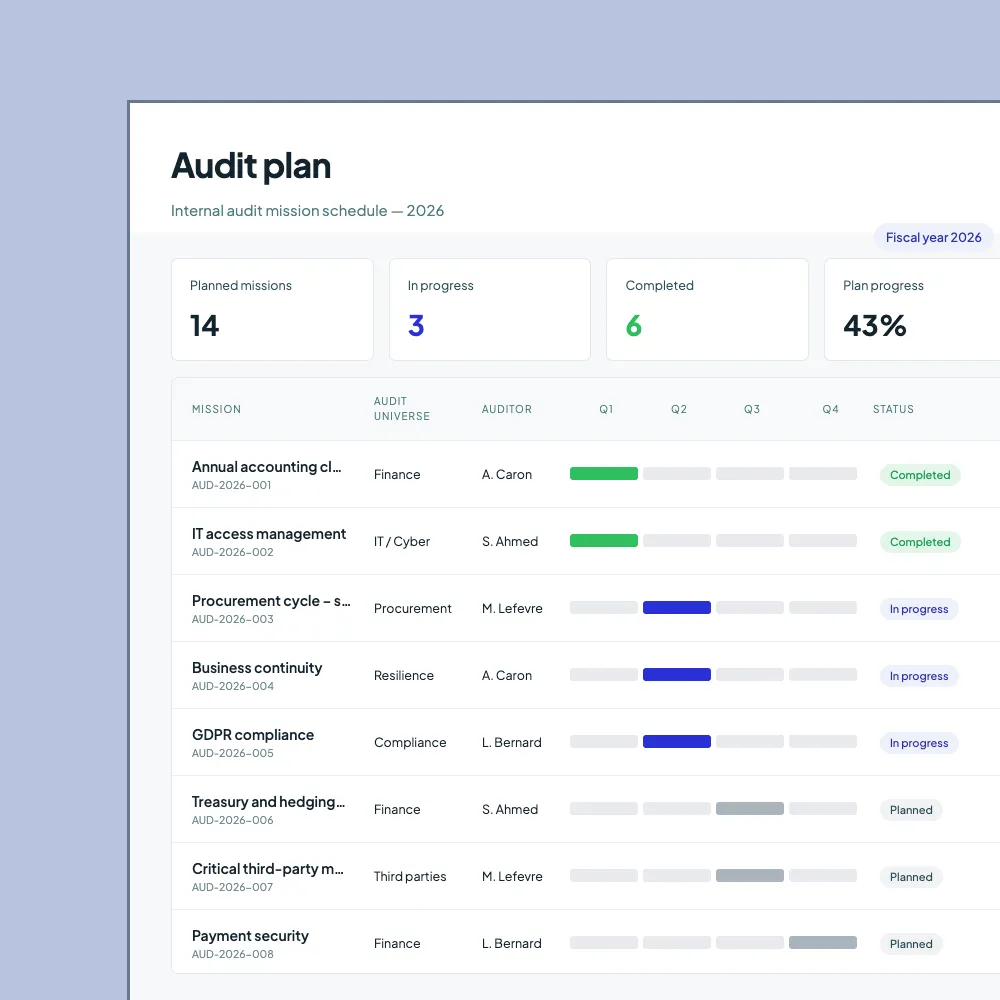
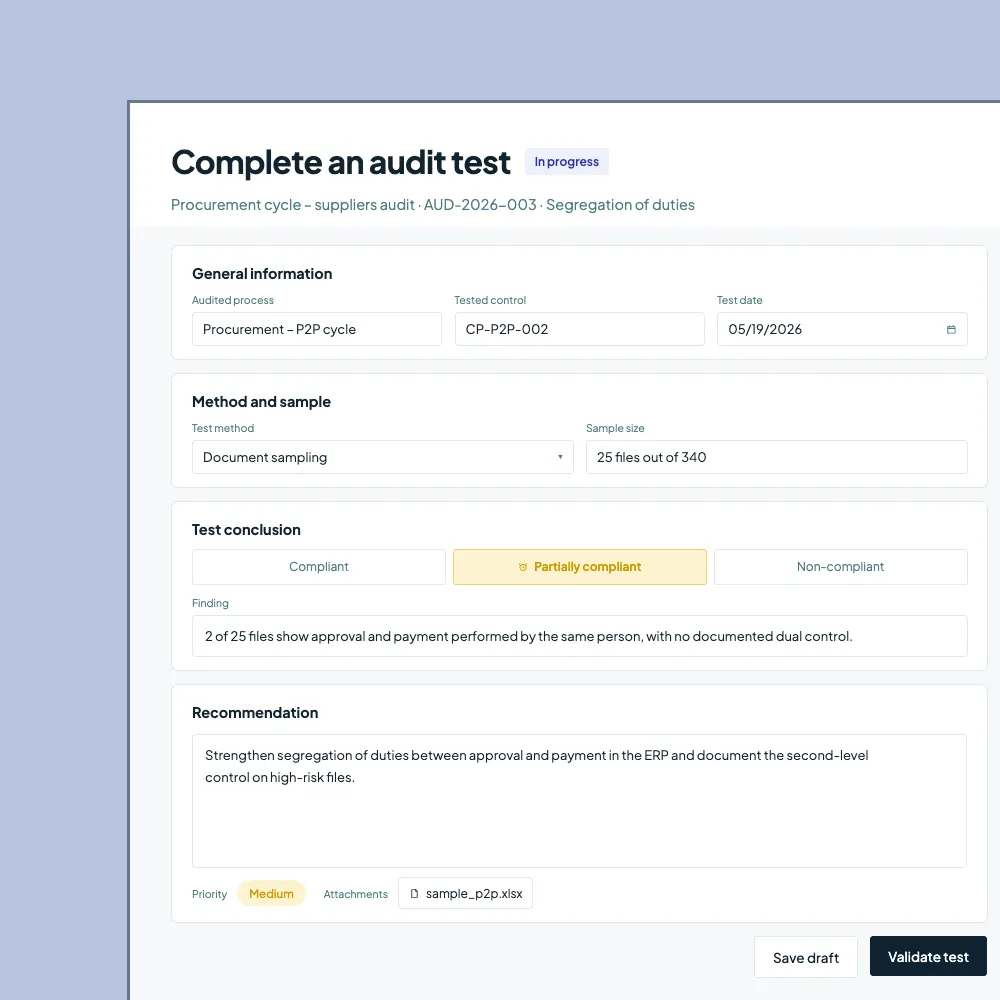
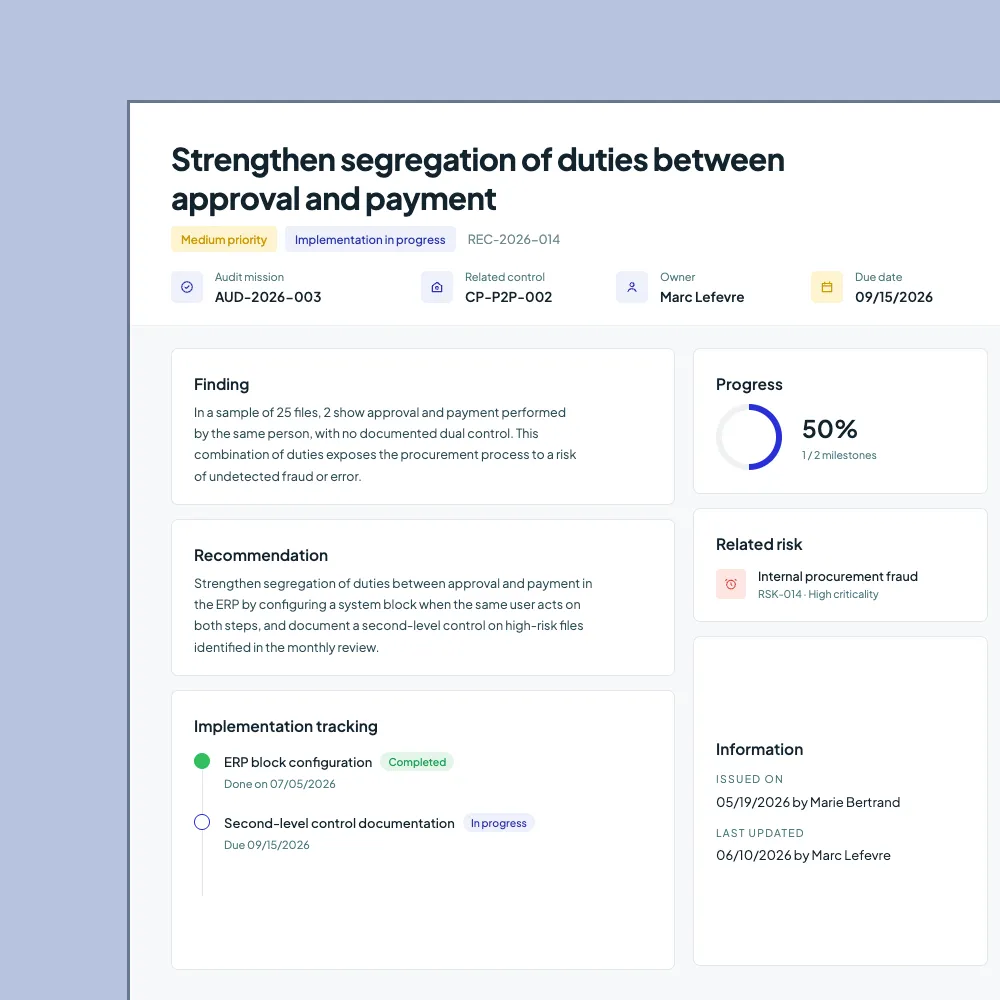
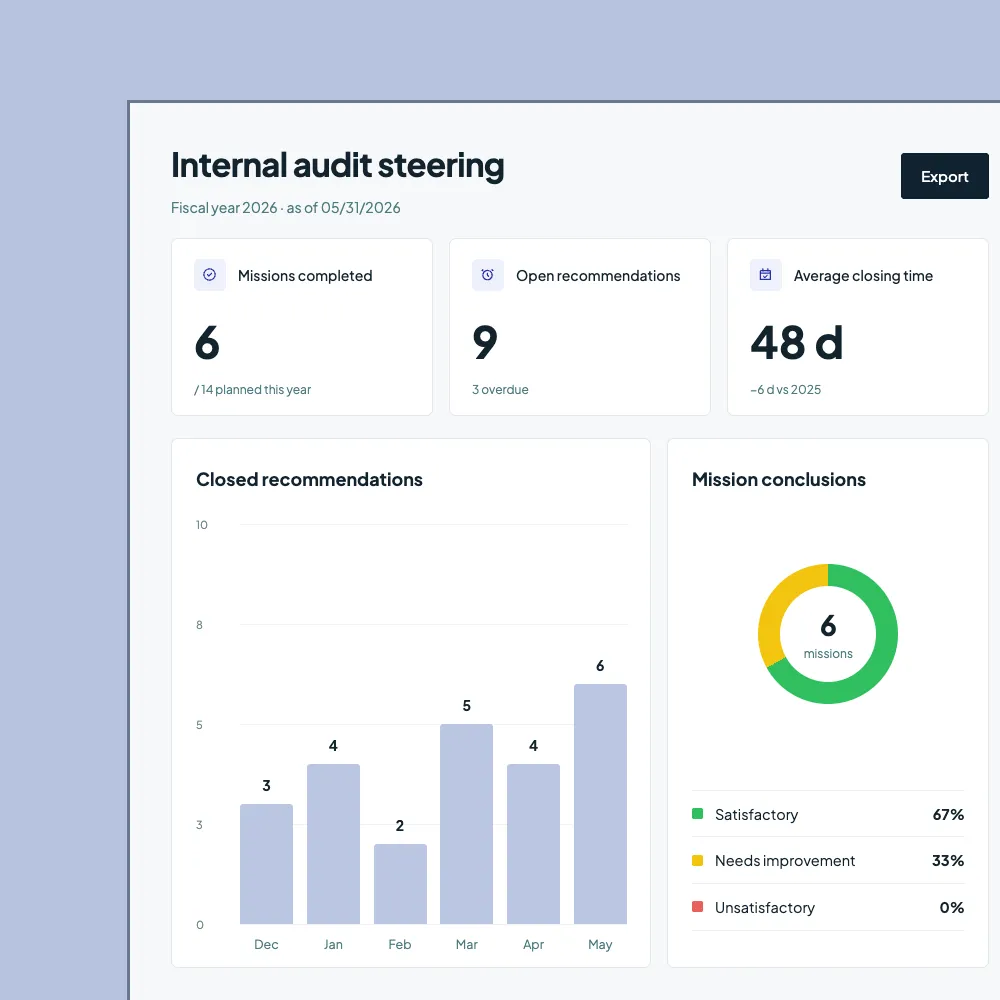

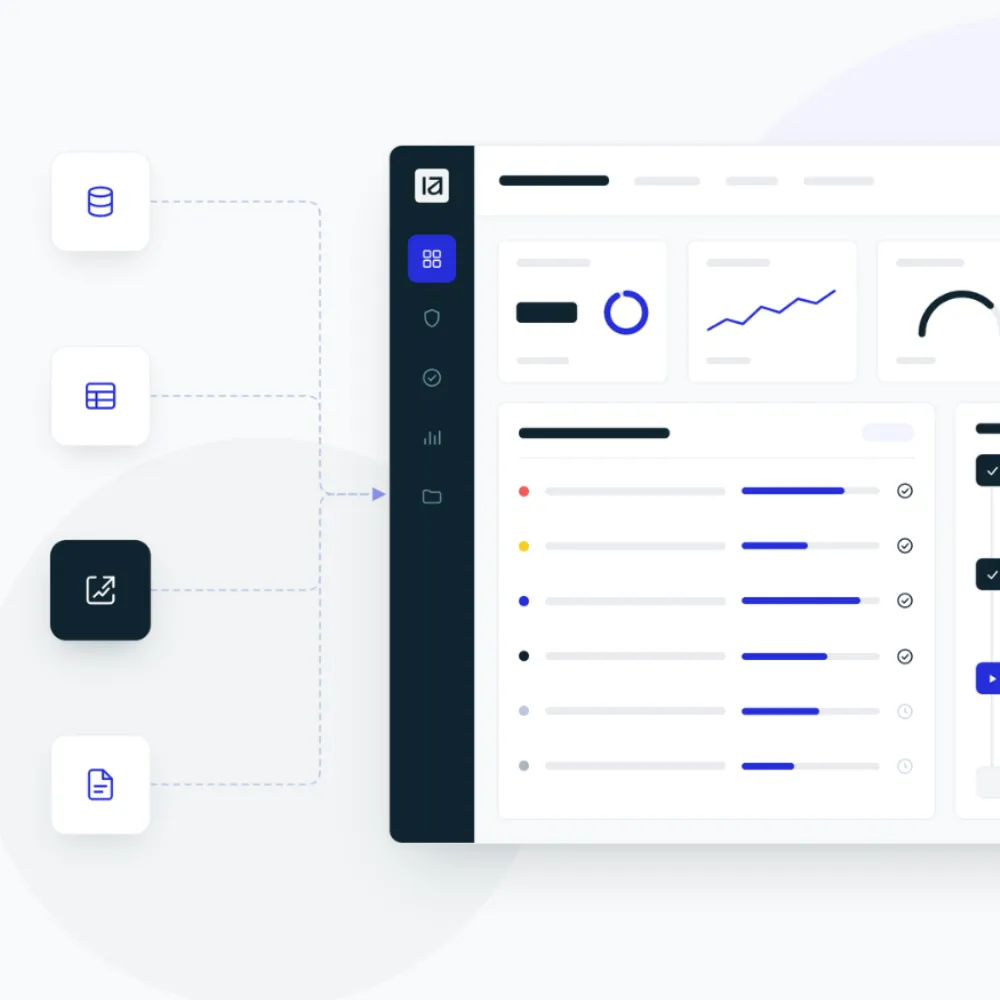
From existing processes to structured anti-corruption management
OTHER SOLUTIONS
Connect Sapin II compliance to your wider governance framework
Preventing corruption involves risk management, third parties, controls and clear accountability. Iskera brings these areas together in a shared environment.
See Iskera in action
See how to build your corruption risk map, organize third-party due diligence, track controls and centralize evidence of your anti-corruption measures.

Latest resources
Frequently asked questions
The French law of 9 December 2016 on transparency, anti-corruption and modernization of economic life strengthens the prevention and detection of corruption and influence peddling. Article 17 requires covered companies to implement an anti-corruption framework built around eight measures and procedures.
Article 17 generally covers companies with at least 500 employees, or members of a group meeting this threshold whose parent company is based in France, where annual turnover or consolidated turnover exceeds €100 million. Specific rules also apply to certain institutions and organizations.
Article 17 sets out eight measures: (1) a code of conduct; (2) an internal whistleblowing system; (3) corruption risk mapping; (4) third-party due diligence; (5) accounting controls; (6) employee training; (7) disciplinary procedures; and (8) internal monitoring and assessment.
The French Anti-Corruption Agency (Agence française anticorruption, AFA) supports public and private organizations in preventing and detecting integrity violations. It can also inspect compliance with the Article 17 requirements at covered companies.
A corruption risk map identifies, analyzes and prioritizes exposure scenarios, taking into account business activities and the geographical areas in which the organization operates. It should be documented and updated regularly to reflect the organization's risk profile.
Due diligence should align with corruption risk mapping and be proportionate to each third party's risk profile. Collected information, assessment criteria, decisions and any additional measures should be documented and retrievable.
The AFA's Enforcement Committee may order improvements to the compliance framework and impose penalties of up to €200,000 for individuals and €1 million for legal entities. Its decision may also be made public.
Iskera helps structure and manage risks, third parties, controls, responsibilities, documents, evidence and action plans. Actual compliance depends on the organization's framework, its effective implementation and how well it matches its risk profile.