AI Governance
Take control of AI across your organization
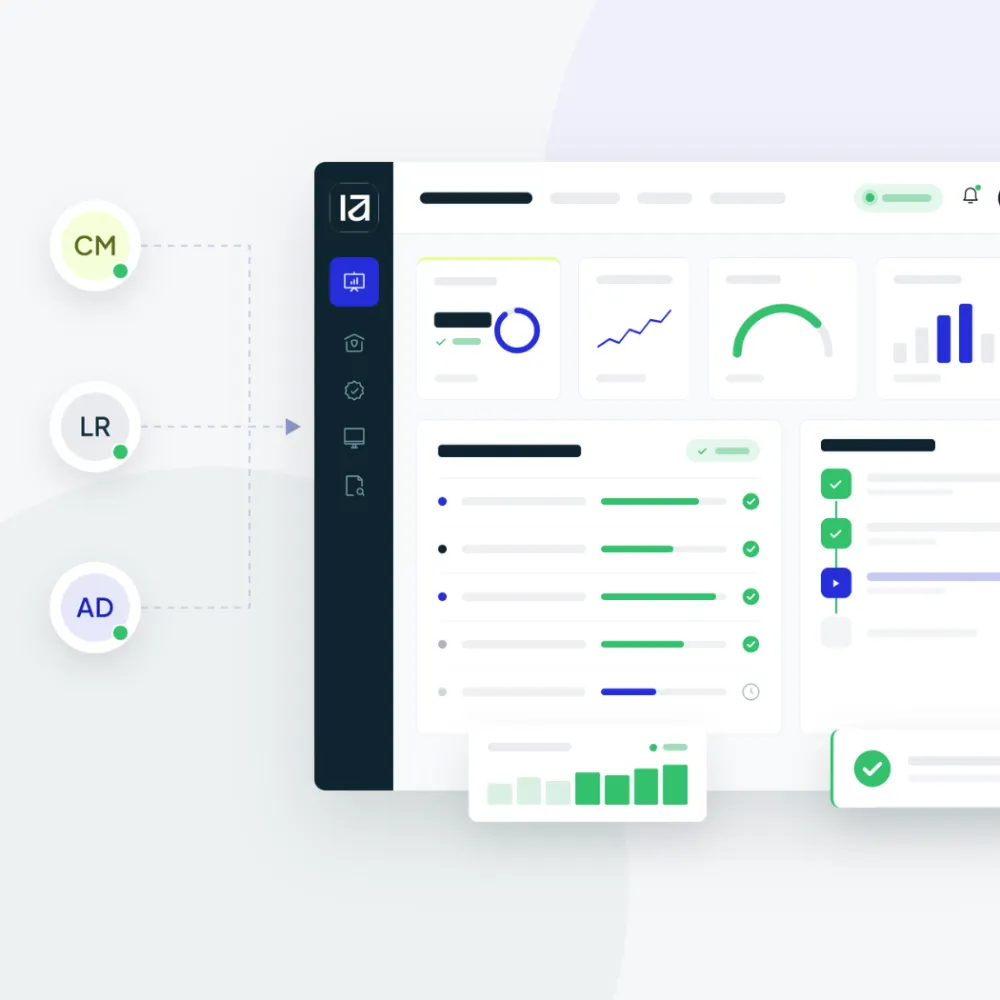
Centralize AI systems and use cases, identify associated risks, and structure the responsibilities, controls, and evidence required to govern them.
Iskera gives you a single environment to manage AI governance from initial identification through ongoing monitoring.
.webp)
Bring structure and control to AI at scale
AI tools and systems are becoming embedded across business functions. Generative AI, AI-enabled SaaS, internal models, and systems used in critical processes all require clear oversight of use cases, responsibilities, and associated risks.
With Iskera, inventory AI systems and use cases, assess their risk level, link applicable requirements and controls, and maintain complete traceability across your framework. Structure your governance around standards and frameworks including the EU AI Act, ISO/IEC 42001, and the NIST AI Risk Management Framework.
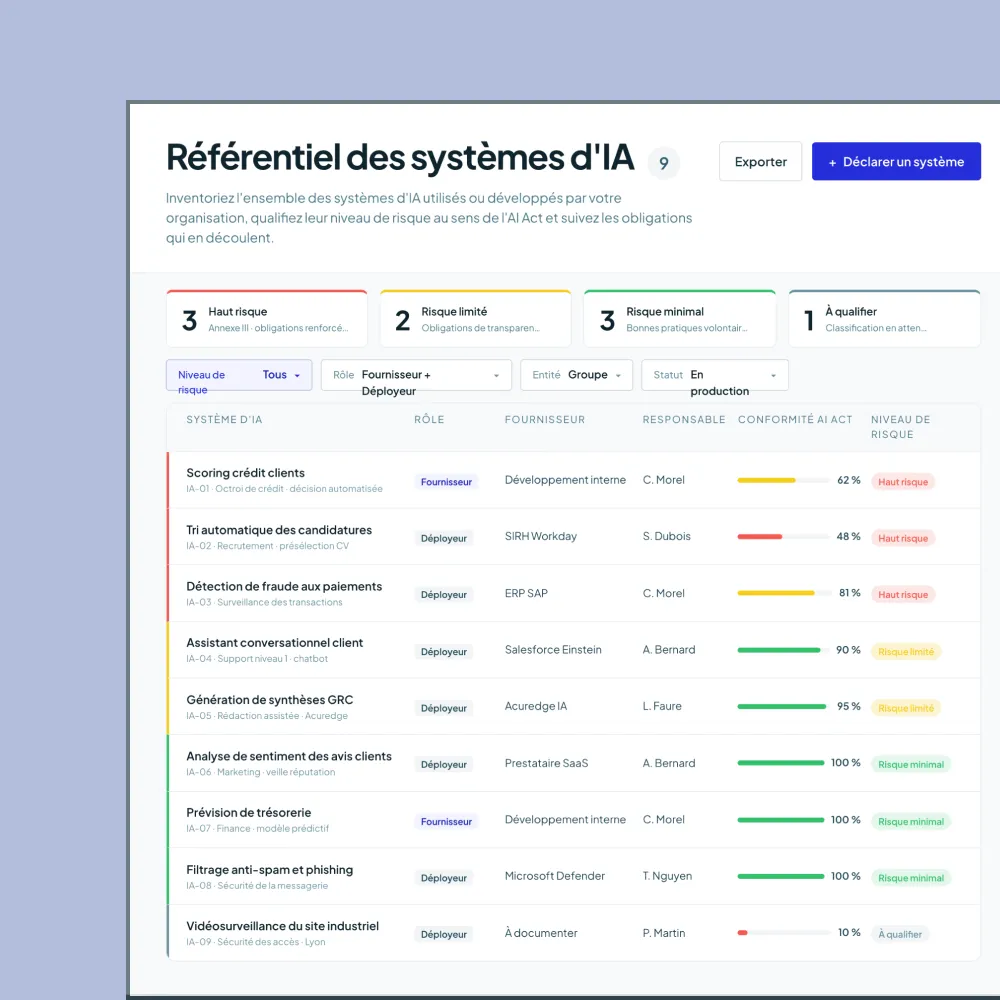
Know where and how AI is being used
Centralize AI systems, models, and use cases in a shared repository.
Document their purpose, scope, data used, relevant providers, and accountable owners.
Gain a complete view of AI already in use or under assessment across your organization and track it throughout its lifecycle.
- AI system and use case inventory
- Customizable classification
- Owners and stakeholders
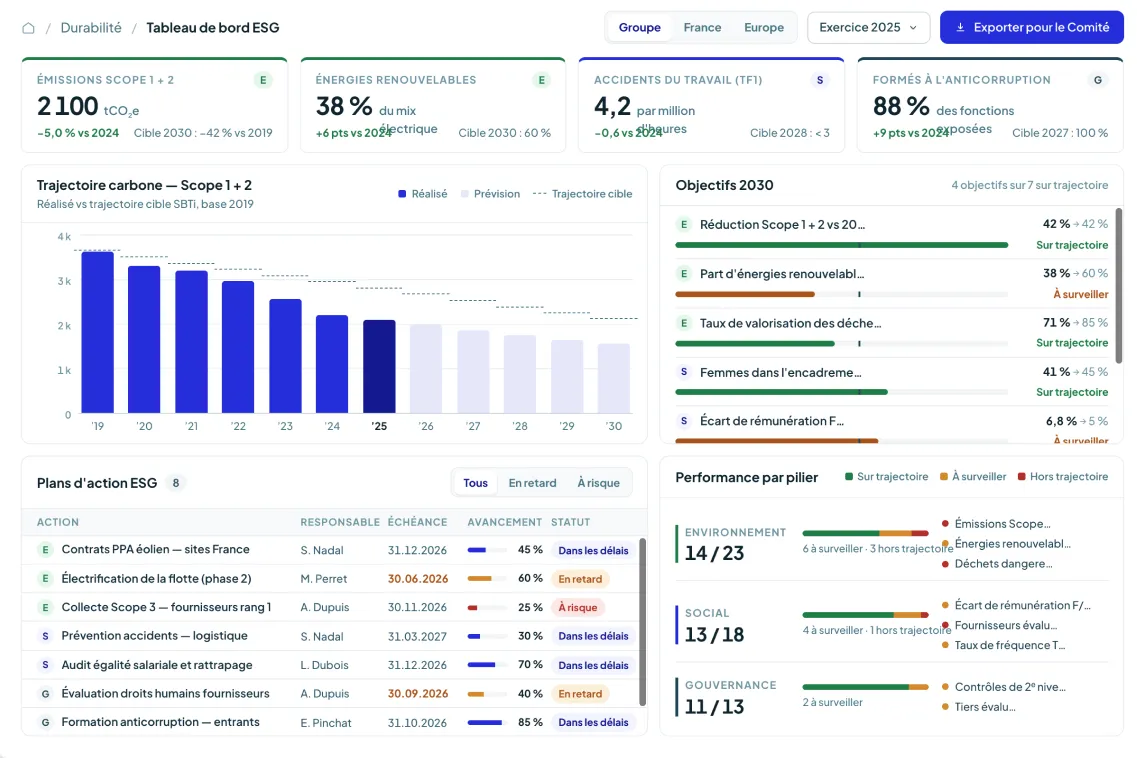
Assess AI risk with confidence
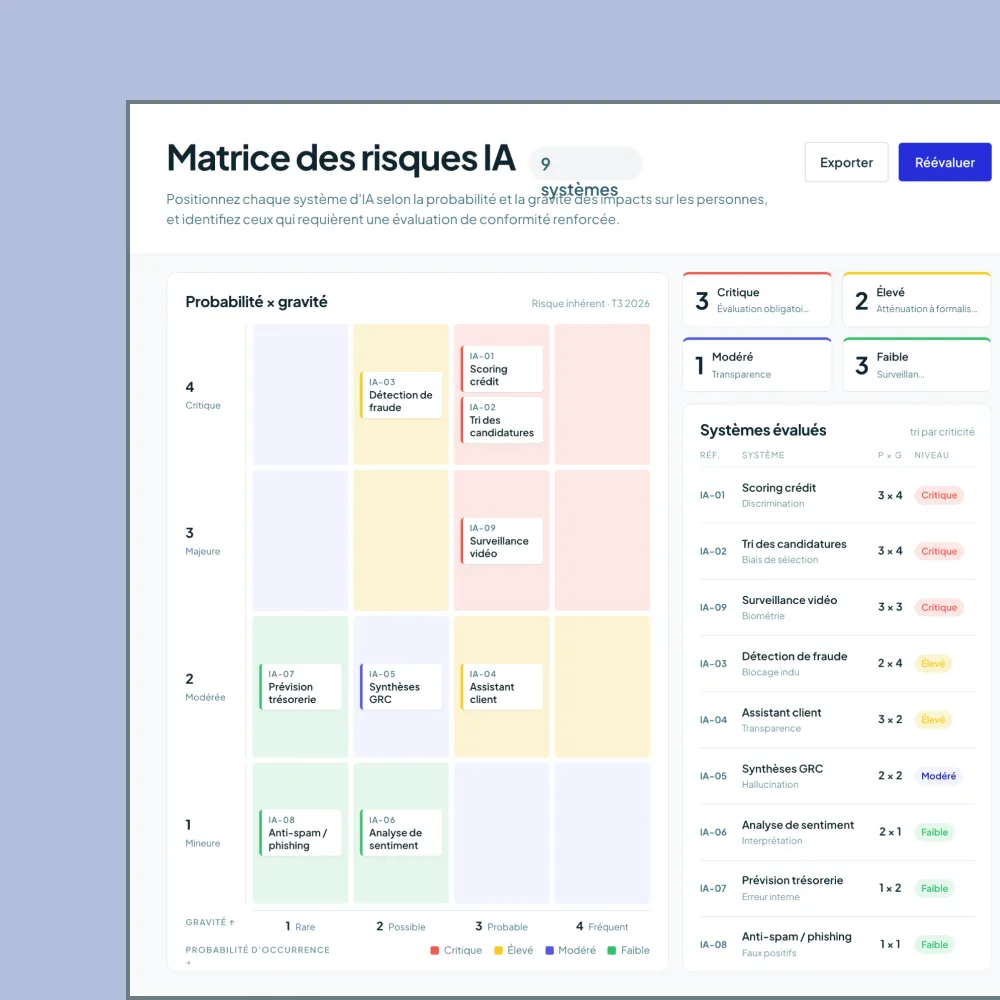
Assess each system based on its context of use, criticality, and associated risks.
Link risks to applicable requirements and document the measures implemented to address them.
Adapt assessment criteria to your methodology and retain a complete history to track how risk levels evolve over time.
- Risk assessment and classification
- Mapping to applicable requirements
- Risk controls and action plans
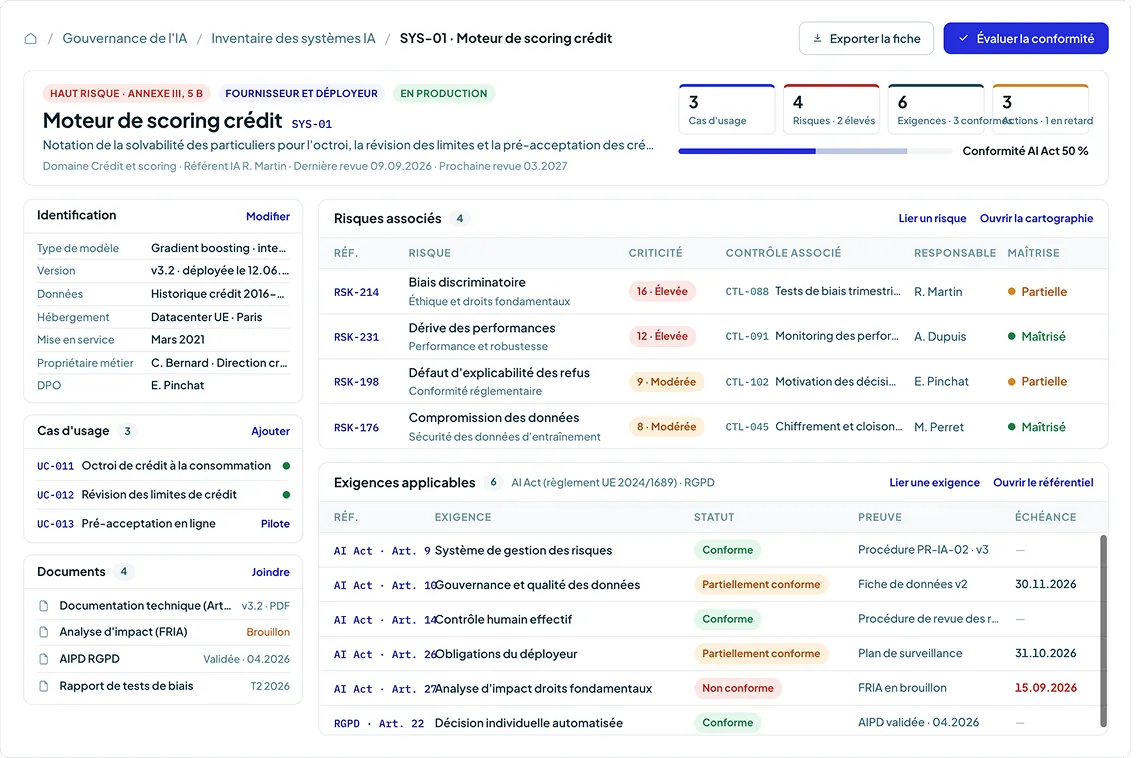
Turn AI requirements into actionable controls
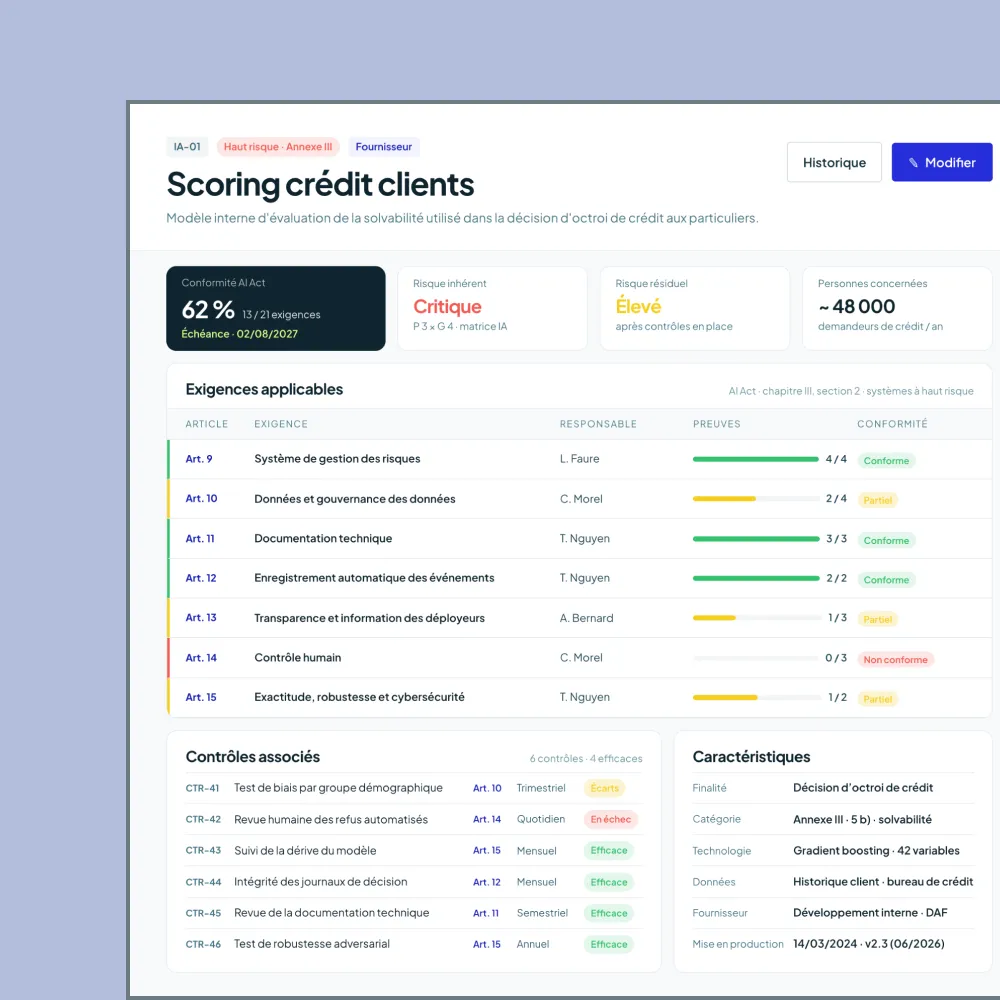
Define the controls required for each AI system, assign clear responsibilities, and centralize supporting documents and evidence.
Track control execution and quickly identify gaps that require action.
- Control plans
- Evidence collection
- Gap and action tracking
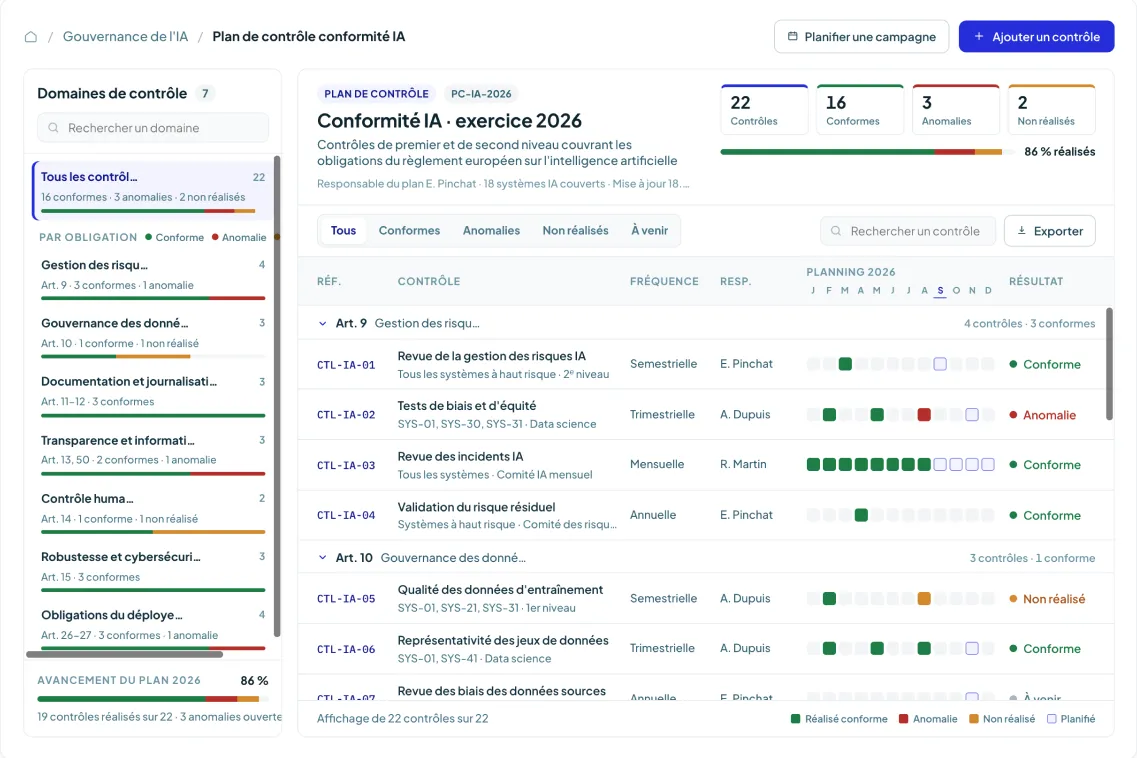
See the full picture with AI governance insights
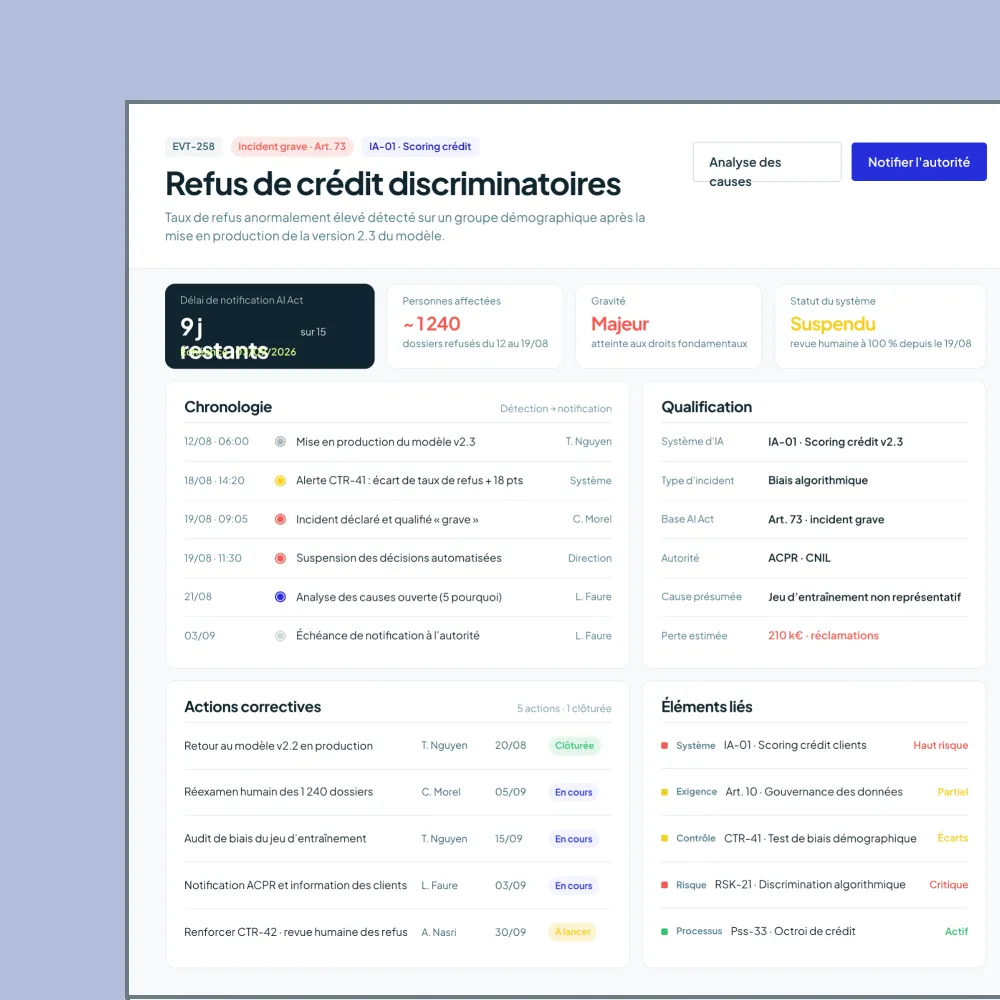
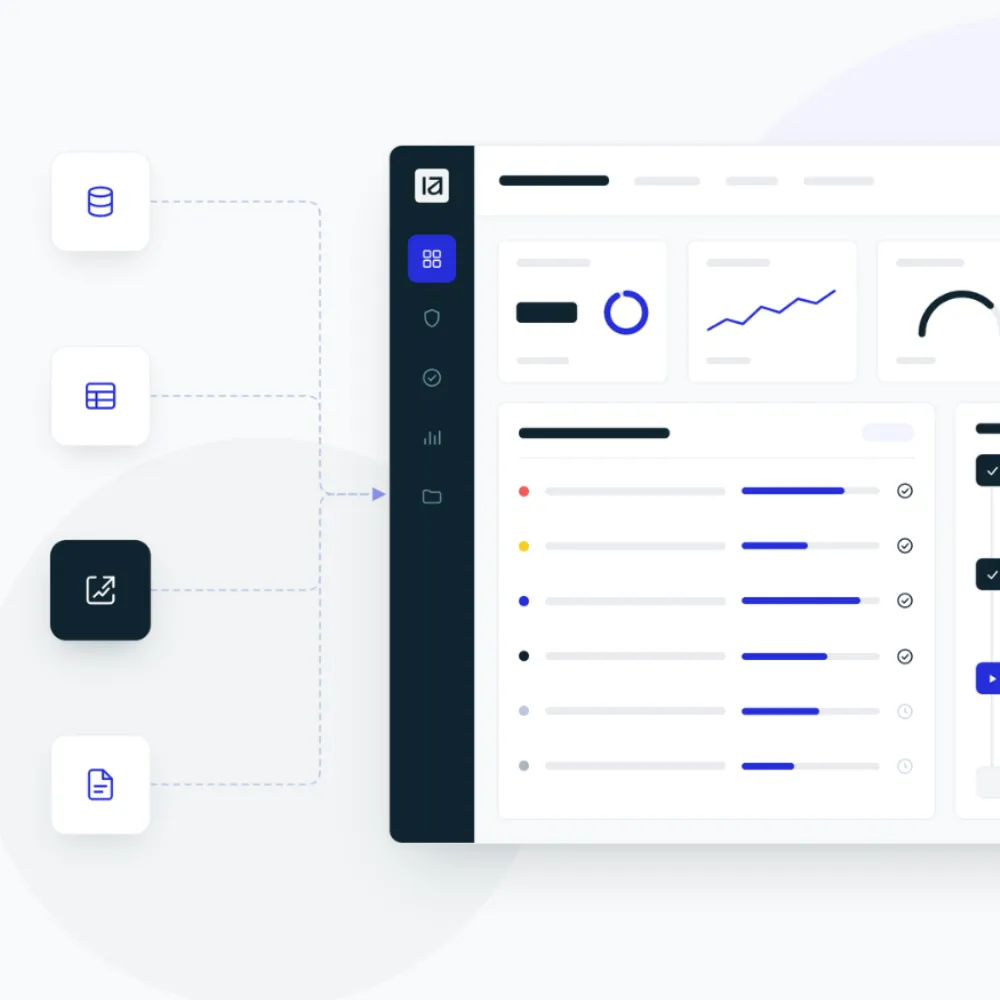
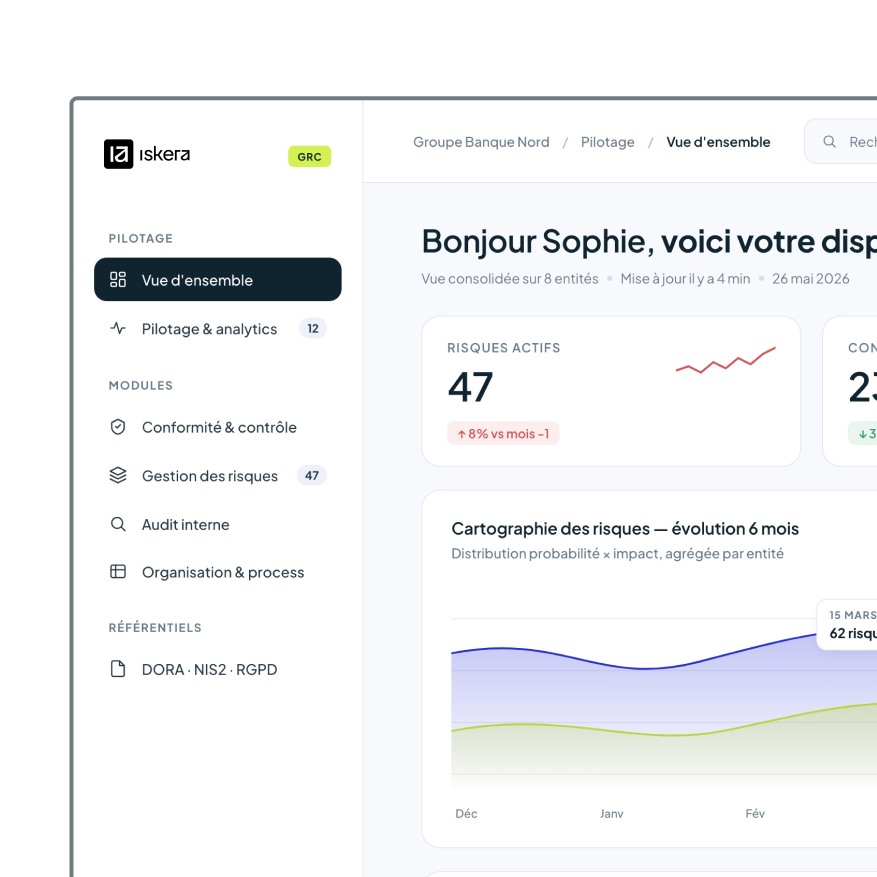
Track your AI inventory, risks, controls, and actions through consolidated dashboards.
Identify areas requiring attention and maintain an up-to-date view of your AI governance framework.
- Risk and compliance indicators
- Control and action tracking
- Consolidated reporting and AI-assisted analysis
.webp)
Move from scattered AI use to AI under control

100%
control over your AI use cases
- 01
See every AI use case in one place
Centralize declared systems, models, and use cases to understand their purpose, owners, risk level, and the requirements that apply to them.
- 02
Make compliance easier to prove
Connect requirements, risks, controls, documents, and evidence to maintain a traceable record for reviews, audits, and regulatory assessments.
- 03
Make ownership clear across teams
Identify the owner of each system and assign responsibilities across business, risk, compliance, legal, security, data, and IT teams.
- 04
Keep AI risks under control over time
Track assessments, incidents, controls, and action plans throughout the lifecycle of your AI systems.
Build your AI governance framework in 3 steps
Build your framework progressively around your existing AI use cases, applicable requirements, and organization.
01
Map your AI landscape
Identify the solutions, models, and use cases deployed across your organization.
Document their purpose, owners, relevant data, and context of use.
02
Assess risks and requirements
Classify systems by risk level, identify applicable requirements, and define the controls and safeguards needed to manage them.
03
Monitor, control, and improve
Schedule controls, centralize evidence, track gaps and action plans, and monitor your framework through consolidated indicators.
Everything you need to govern AI with confidence
.webp)
From scattered AI initiatives to structured governance

OTHER SOLUTIONS
Connect AI governance to your wider GRC framework
AI risks do not exist in isolation. Iskera connects AI systems with risks, controls, incidents, data, and requirements to create a consistent governance framework.
A demo that speaks your language, a clear vision as a result
See how Iskera can help you structure AI governance, map systems and use cases, assess associated risks, and centralize controls, evidence, and action plans.
Whether you are building your first AI governance framework, preparing for the EU AI Act, or managing AI governance across multiple entities, the demonstration is tailored to your organization, maturity, and priorities.

Latest resources
Frequently asked questions
AI governance is the set of rules, responsibilities, processes, and controls used to oversee the development, acquisition, and use of artificial intelligence systems within an organization.
AI governance starts by identifying existing systems and use cases, classifying them, and assessing their risks.
Responsibilities, requirements, controls, and monitoring mechanisms can then be defined according to the context of each system.
Iskera centralizes AI systems and use cases, documents their classification, maps applicable requirements, assesses risks, tracks controls, and centralizes evidence and action plans.
The obligations that apply depend on the organization's role and the type of AI system concerned.
ISO/IEC 42001 defines requirements for an artificial intelligence management system.
It provides a framework for structuring policies, responsibilities, processes, and mechanisms for managing AI-related risks.
The EU AI Act is a European regulatory framework whose obligations vary according to factors such as the type of AI system and the organization's role.
AI governance is broader: it defines how an organization identifies, approves, controls, and monitors its use of AI over time.
Pricing depends on the number of users, deployment scope, features used, and your organization's requirements.
A demonstration helps define the right scope and provides the basis for a tailored quote.