Compliance
Manage all your compliance requirements from a single platform
Centralize your regulatory, standards-based, and internal requirements, assess your compliance level, and track the actions required from a single repository.
From ISO certifications to European and industry-specific regulations, Iskera helps you structure and manage your compliance framework over time.
Regulatory reporting becomes a true compliance driver
ISO standards, European regulations, industry-specific requirements, internal policies: organizations must comply with an ever-growing number of frameworks and demonstrate compliance over time.
Iskera centralizes your requirements and links them to your processes, risks, controls, documents, evidence, and action plans. This gives you a clear view of your compliance level and the actions to take.
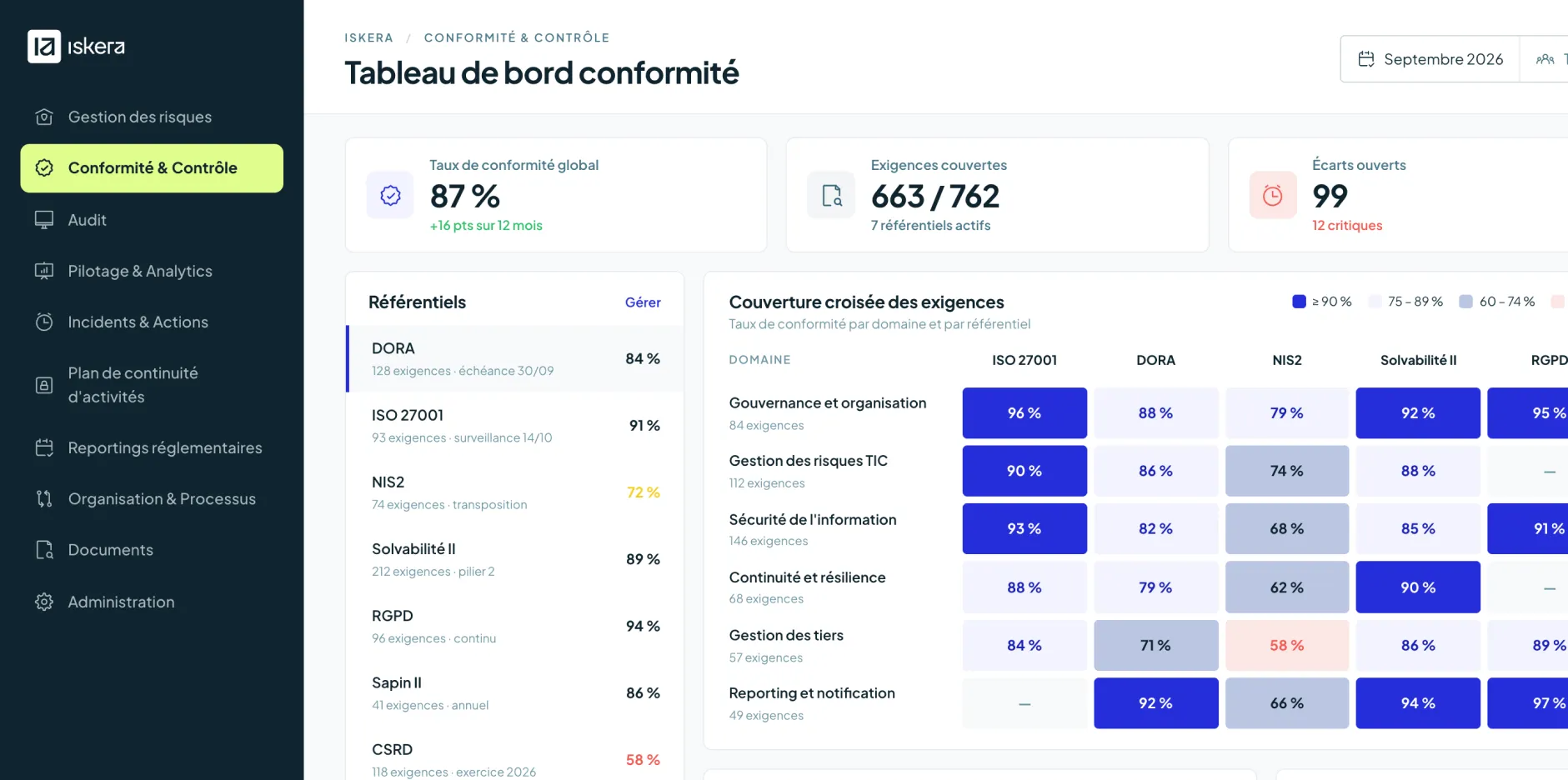
Centralize all your requirements
Bring your regulations, standards, internal frameworks, and contractual obligations together in one environment.
Structure each requirement and identify the relevant entities, processes, owners, or activities.
- Centralized compliance repository
- Regulatory and standards-based requirements
- Multi-framework management
.webp)
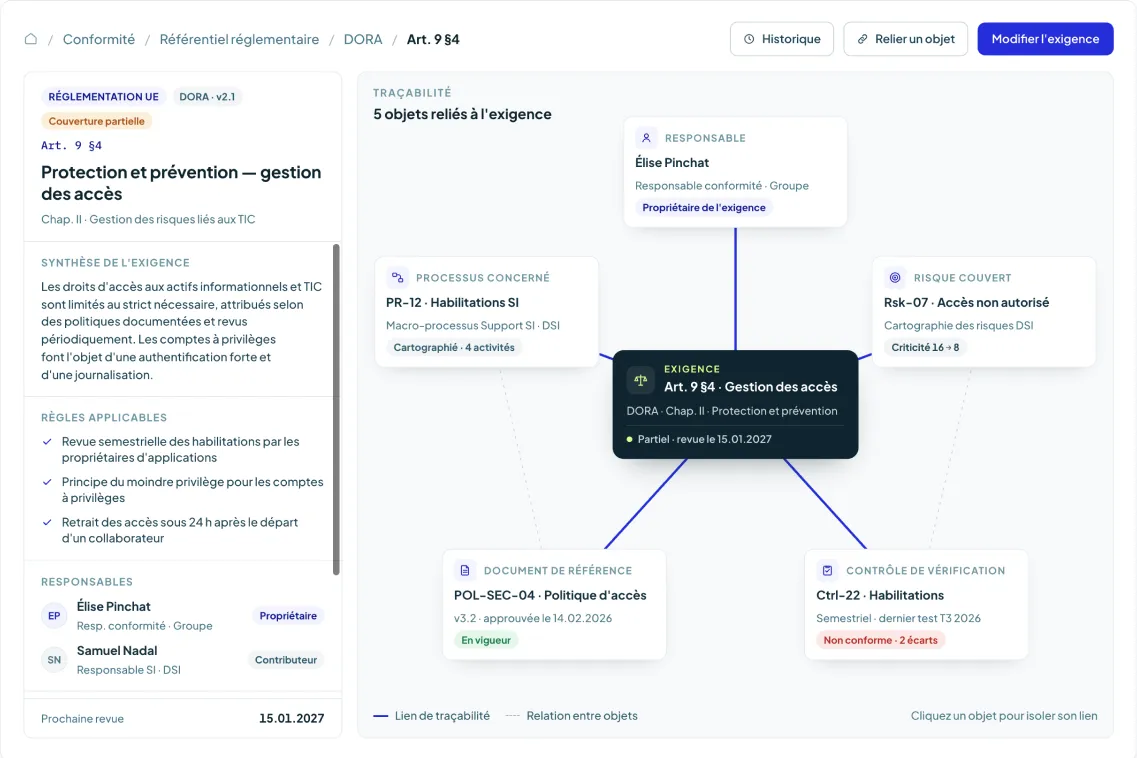
Connect your requirements to your governance framework
Link each requirement to the relevant processes, risks, controls, procedures, documents, and owners.
A single measure can address several frameworks, reducing duplicate assessments and evidence collection.
- Links between requirements and controls
- Cross-references between frameworks
- Clearly defined responsibilities
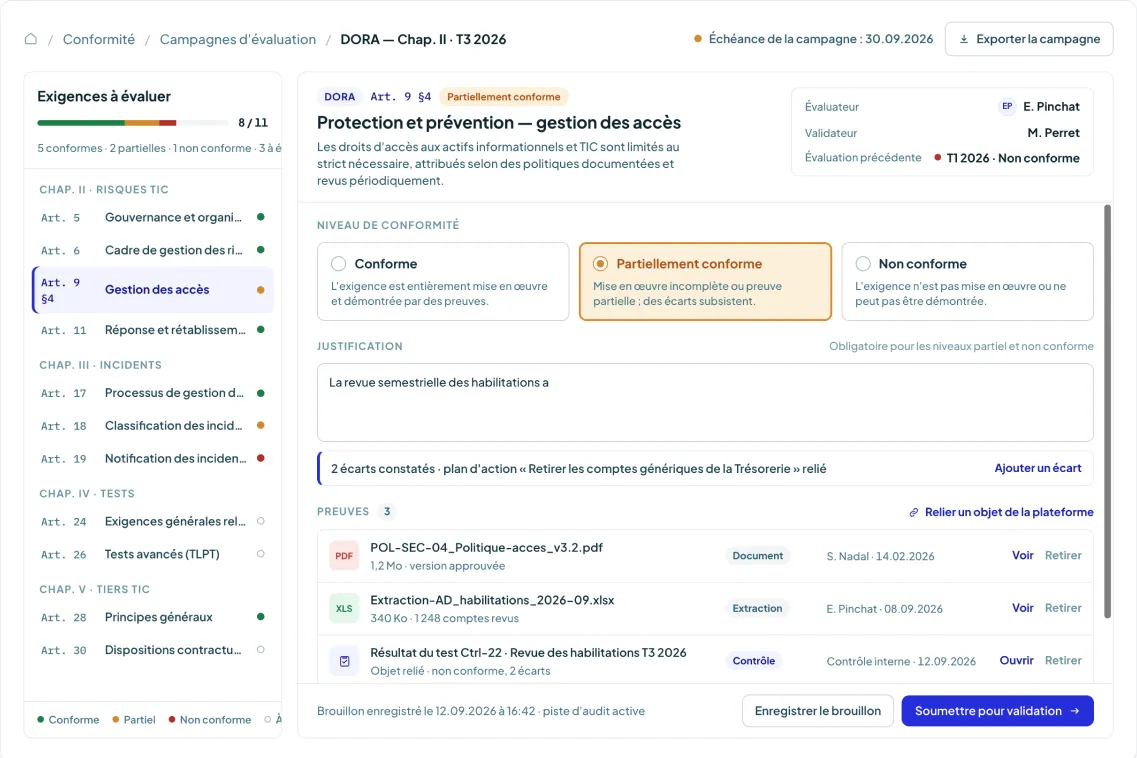
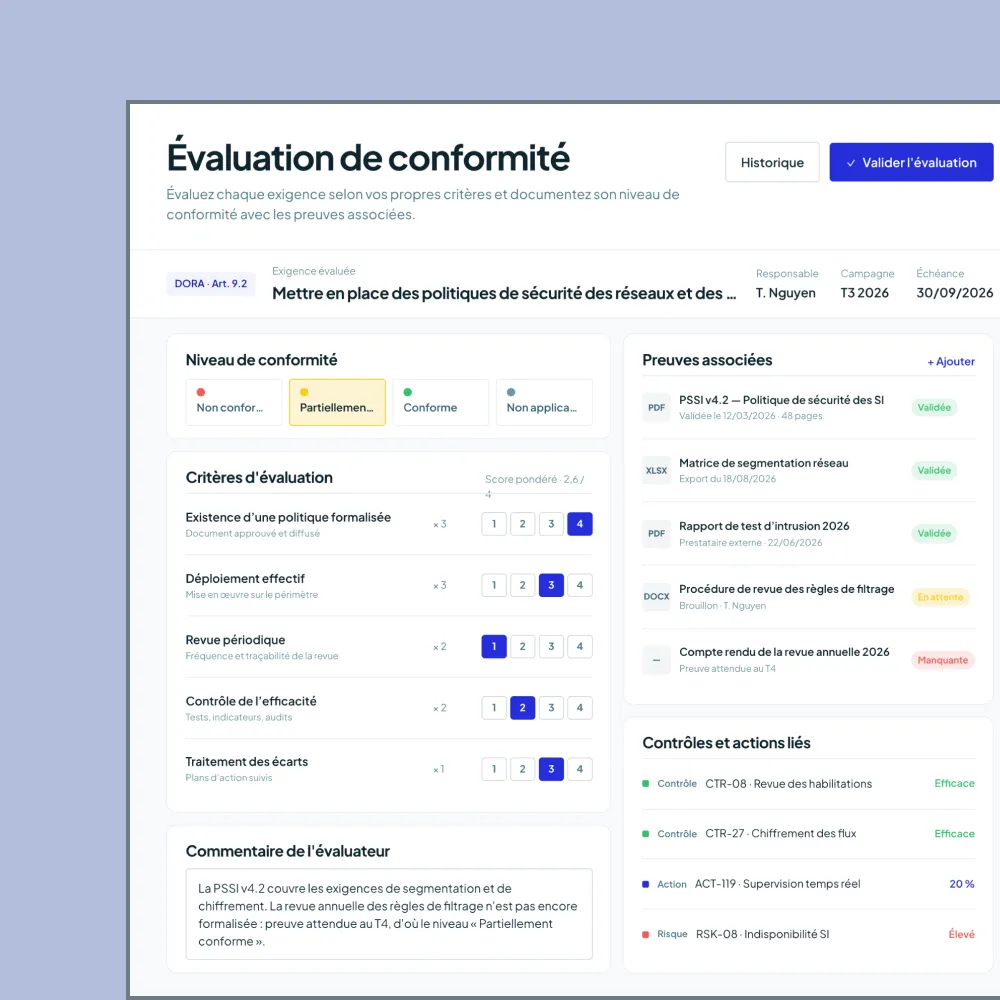
Assess and document your compliance
Assess your compliance level requirement by requirement and centralize the evidence needed to support your assessments.
Every change, approval, and supporting document is recorded to simplify audits, certifications, and reviews.
- Compliance assessments
- Evidence and supporting document management
- Full traceability
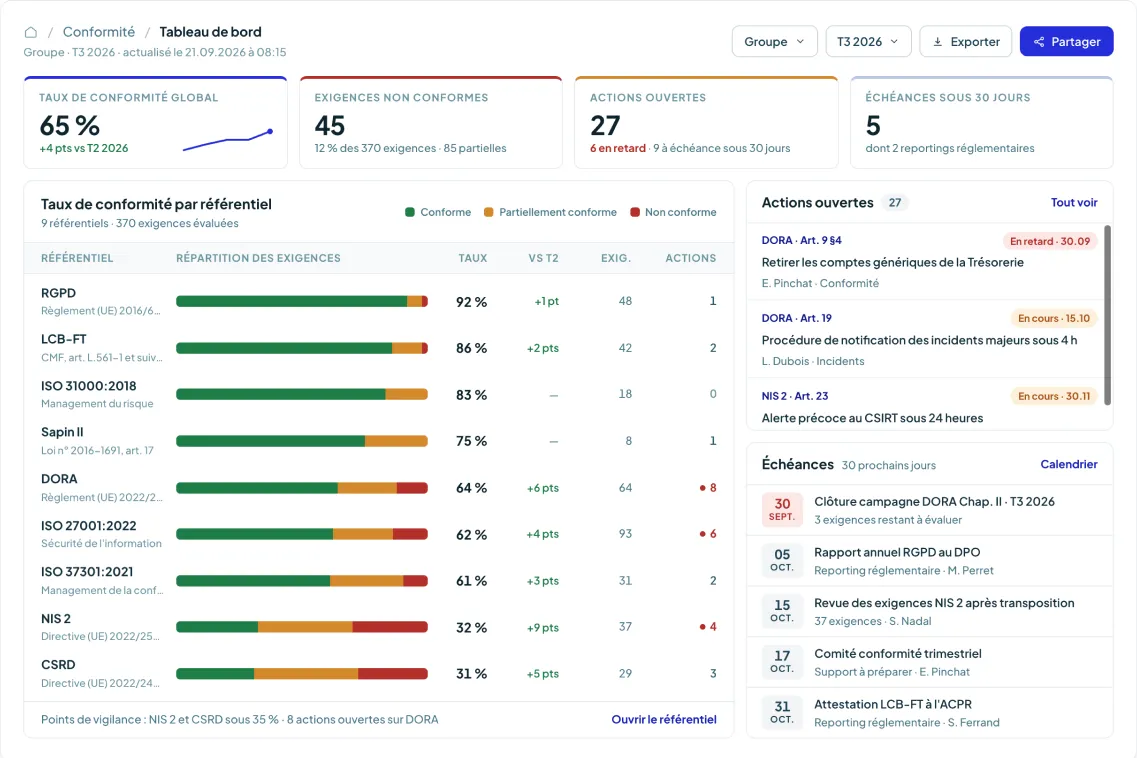
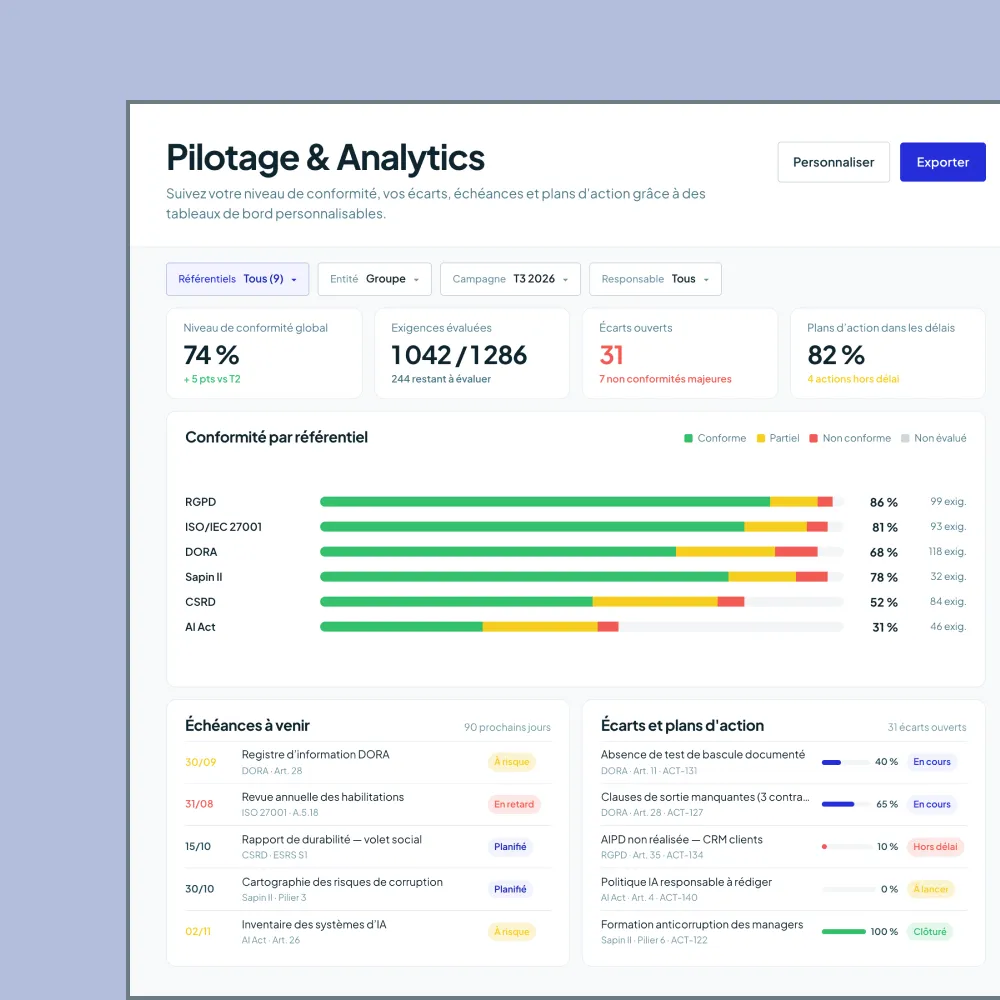
Manage compliance over time
View your compliance level by regulation, standard, entity, or domain and quickly identify gaps requiring action.
Action plans, deadlines, and owners are directly integrated into your compliance management.
- Compliance dashboards
- Gap and action plan tracking
- Alerts and deadlines
A compliance framework that is centralized, traceable, and always up to date

100%
of your requirements centralized in a single repository
- 01
A clear view of your obligations
Bring regulations, standards, and internal frameworks together in one environment and immediately identify applicable requirements.
- 02
Connected compliance frameworks
Reuse controls, documents, and evidence shared across multiple requirements to reduce duplication and repetitive work.
- 03
Evidence always available
Keep every document, approval, comment, and history directly linked to the relevant requirement.
- 04
Turn gaps into actions
Identify non-compliance, assign corrective actions, and track progress through to closure.
Deploy your compliance framework in 3 steps
A progressive approach to migrate your existing frameworks, assess compliance, and manage your actions.
01
Centralize your frameworks
Import your standards, regulations, internal policies, and existing frameworks.
Structure the requirements applicable to each entity or activity.
02
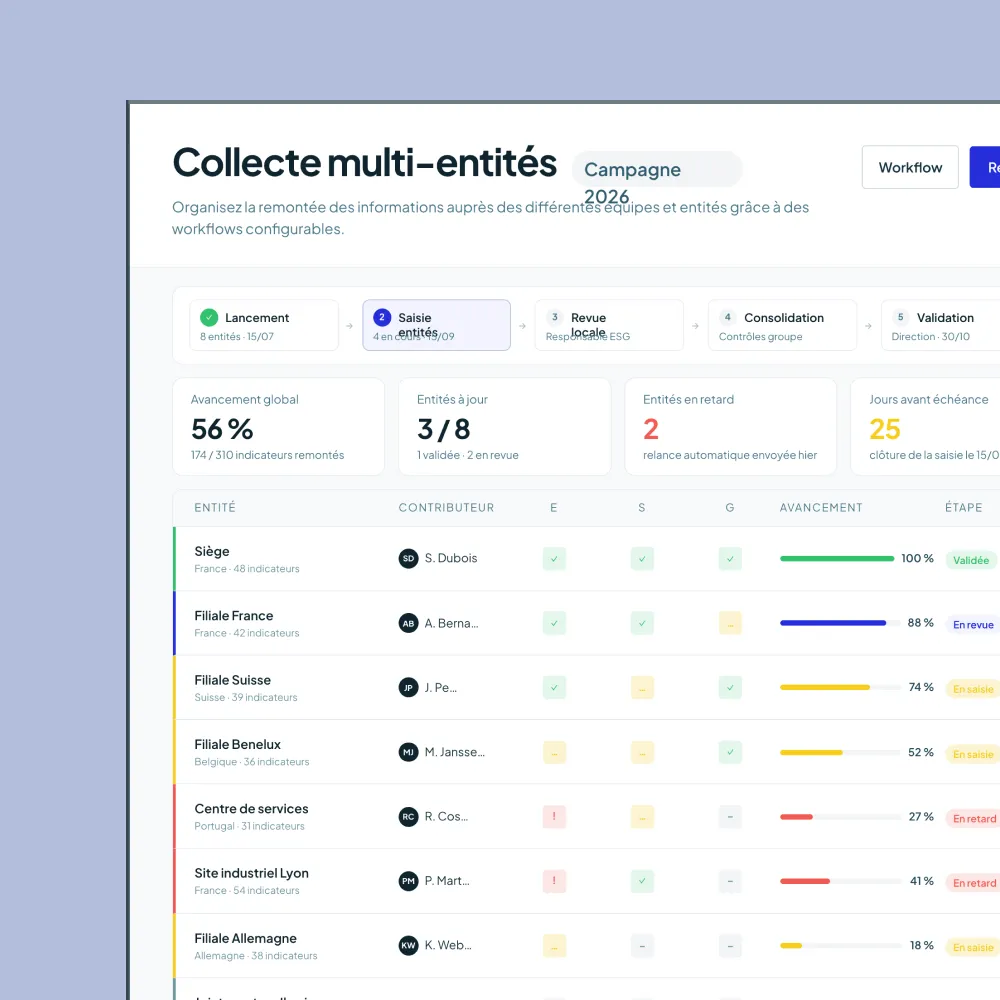
Assess your compliance
Assign requirements to the relevant owners, perform assessments, and centralize the necessary documents and evidence.
03
Manage gaps and actions
View your compliance level, identify gaps, and track action plans, owners, and deadlines through to closure.
Everything you need to manage compliance
.webp)
Move seamlessly from your existing setup to a fully operational framework

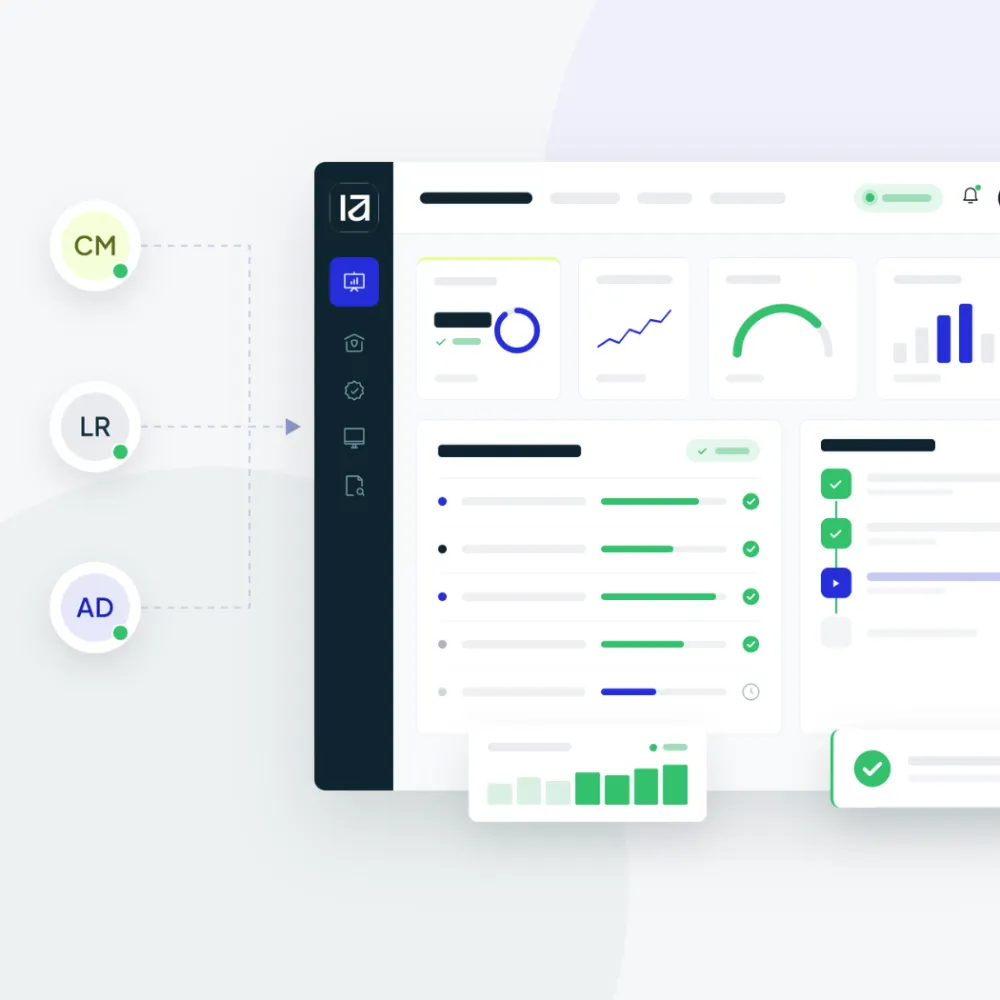
OTHER SOLUTIONS
Complete your compliance framework
Discover other Iskera solutions to centralize your data, strengthen compliance, and manage governance from a single platform.
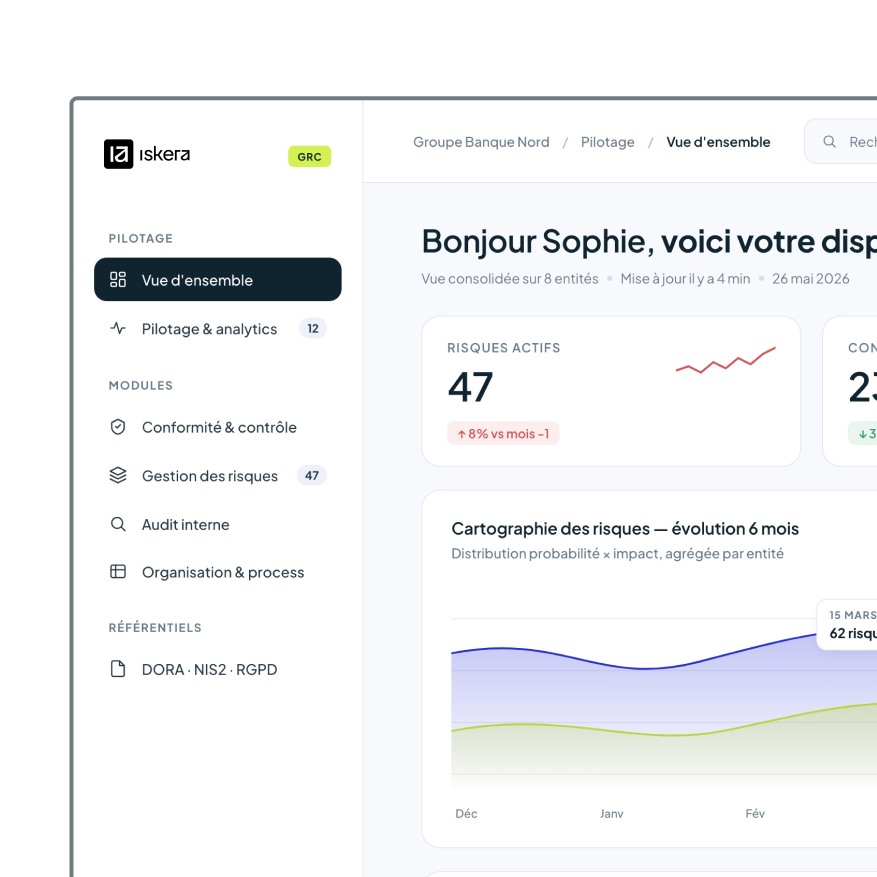
A demo that speaks your language, a clear vision as a result
Discover how to centralize your requirements, assess compliance, and manage your action plans from a single platform.
A demonstration tailored to your frameworks, industry, and organization.

Latest resources
Frequently asked questions
Compliance software centralizes the regulatory, standards-based, and internal requirements an organization must meet. It supports assessment, evidence collection, gap tracking, and action plan management.
Iskera lets you structure different compliance frameworks, including European regulations, industry-specific requirements, ISO standards, and internal frameworks.
The platform can support frameworks related to DORA, NIS2, GDPR, Solvency II, Basel III, Sapin II, and certifications such as ISO 9001, ISO 14001, ISO 45001, and ISO 27001.
Yes. Multiple standards and regulations can be managed in the same environment. Requirements can be linked to the same processes, risks, controls, or documents to reuse common elements.
Each gap can be assigned to an owner, action plan, and deadline. Dashboards then make it possible to track progress and changes in the overall compliance level.
The platform helps structure the requirements of an ISO framework, document evidence, perform assessments, and track the actions required to prepare for and maintain certification.